
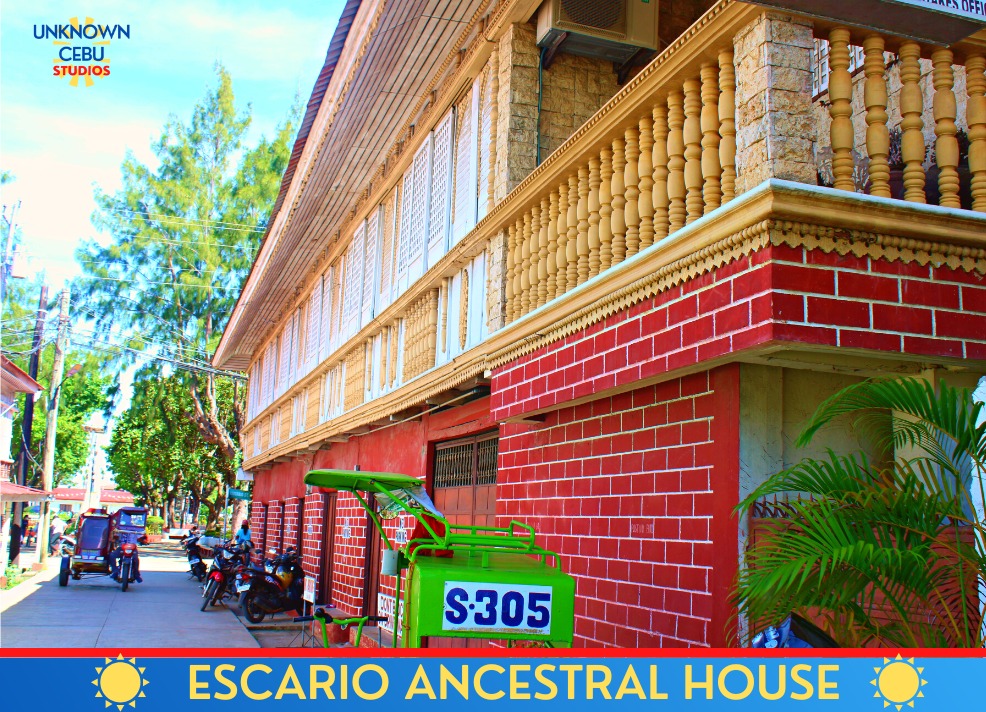
Capiz Windows, Lampirong, Pios, or Windowpane Oyster is one of the most common type of window material used in the Philippines between the years of 1755-1960.When we see most ancestral houses anywhere in the Philippines from Luzon to Mindanao, we see Capiz being used as windows, integrated into colorful designs, and at present as furniture embellishments as part of cultural exhibitions.. Today we just accept that these windows are a staple of Philippine architecture being featured in most ancestral and heritage houses in the country, but one must ask, why? Why are these windows so common throughout the breadth of the nation from Batanes to Davao and From Palawan to Eastern Samar. They were used in many buildings such as Bahay-Na-Bato style ancestral houses, churches, government buildings, and one of the most notable examples being found in American Period Gabaldon School Buildings.

Capiz windows or Windowpane oyster has been used for many years as a substitute when glass was harder to obtain. The species of oyster the Capiz shell comes from is from the species Placuna Placenta which is found from the Gulf of Aden in the middle east to South east Asia. Their lightweight nature, abundance in supply, and ease access to them by the coasts made them an attractive product to use. When tracing back documentary evidence, one of the first mentions of Capiz shells or Capiz windows was in 1860 when the term was documented in the book,“Vocabolario de la lengua Tagala”; defined then as “La Ventana” or window; however, their use extends to even before their mention in the 1860 dictionary as structures built before 1860 were already readily using Capiz windows. During the Spanish period, when constructing buildings, friars busy establishing their churches were noted, “The Franciscans took note of the convenience of erecting their [churches] according to native
criteria” and thus “received a cheaper and better-adapted structure closer to local spatial conception.” Meaning, they considered the local environment and practical needs which is one of the reasons why Capiz windows were adopted. The following images are of Spanish Period Ancestral Houses.


Their use continued into the 18th to 20th centuries, when, in most buildings built in the Philippines, one would find an abundance in the usage of Capiz windows alongside glass, stained glass, and the more common solid wood windows. It was during the late Spanish period — when the Philippines was opened to trade and had wider access to technology. One of the foremost reasons why the window was used in the Philippines in the first place was because of its durability and suitability to the climate wherein one could have a strong and lasting window that did not need to be opened for light to come through; it was opaque and not transparent allowing for some privacy. It should be noted that it was not only in the Philippines were this type of window became widespread; although not in the same lattice format observed in the country, other former colonies have used the shell to similar effect as can be seen in Goa, India; this is significant as it has been noted that the Chinese and Portuguese were some of the earliest purveyors of this method of window making. The origin of the name “Capiz Window” is generally said to come from Capiz Province on Panay island where the shell was abundant.


Capiz windows usually come in two variants: The prevailing sliding Capiz window, and the less common, but still widely used, fixed window. The Sliding variant of the window is the most adopted form in the country, being observed in nearly every house that used the window. The fixed variant window serves more of a decorative purpose as a fixture since it cannot be moved to be opened and closed unlike its sliding counterpart. For the fixed variant, examples include: The Mancao Ancestral House located in Carcar City, Cebu and the Felix Monte House in Sibonga, Cebu.
The process of making Capiz windows involves several steps. First, the bivalve mollusk is harvested from shallow coastal waters where they reside; then, they are cleaned of dirt, barnacles, and other debris and then they are polished. Large scissors of knives are then used to shape them. Once the pieces are cut, the shells are inserted into a lattice shaped frame made of Philippine hardwood. The final design of the Capiz window can be modified into a style that the user wants: mostly resulting in geometrical variations in the form of diamonds, zigzags, and even painted versions mimicking stained glass.


THE DECLINE
The decline in the use of the Capiz window started in the 1920s-1940s. The wider introduction of glass to the Philippines in the form of American Industry started the decline of the Capiz window. Those who wanted to follow the popular styles of the American period opted for a mix of glass and Capiz window or have no Capiz at all; however, a large number of homes and structures integrated both for a vibrant mix.


The most significant decline in use was in the 1950s-1970s. By the end of World War 2 and the subsequent restoration projects in the Philippines Capiz window had become unfavored, one reason was because by the 1950s and 60s glass was starting to become very common and starting to match the price of Capiz windows. In urbanized areas like Cebu, Davao and most importantly Manila it was much easier to import glass than to make Capiz windows. Jalousie window designs started to overtake the Capiz designs, part of the reason the usage of the window was declining at the time was because Filipinos wanted a new start after the war meaning the change was not only in price and practicality, but also in Culture. The styles of Art-Deco, Italianate, and Modernist took over Philippine Architecture during this time. Examples of the decline in the use of windowpane oyster include the Pascual Modernist House (C. 1948) built in Santa Ana, Manila and the Garces Ancestral House (C. 1952-1955): Both of which employ extensive use of glass windows.

By Urbanroamer – Own work, CC BY-SA 3.0, https://commons.wikimedia.org/w/index.php?curid=32539700

In addition, the specialized skills needed to produce Capiz windows on a large scale was time consuming in comparison to glass; finally, environmental regulation and degradation caused the supply of mollusks to decrease . By the 1970s the usage of Capiz had almost disappeared in building a new house. Modernist styles were in vogue and pushed out traditional Filipino styles. In short, new styles and modernist leanings pushed out the traditional window as a relic of the past or as more of a cultural product from a bygone era.
THE REVIVAL
Today Capiz windows have seen a resurgence as many appreciate old Ancestral houses or simply appreciate the design of Capiz windows. The use of Capiz windows are now more of a fashion statement that you appreciate the old and want to continue the tradition. They are still implemented today in the making of souvenirs, furniture, chandeliers, decorative elements, Christmas lanterns (Locally known as Parol) and other products that have made the Philippines known for them. There is also a burgeoning movement to use them in modern construction inspired by traditional architecture.
Sources:
JAMIR, M. COVARRUBIAS. “The Lantin House of Candelaria.” Philippine Studies 35, no. 3 (1987): 369–76. http://www.jstor.org/stable/42633029.
Calacday, Jethro. Philippine Studies: Historical & Ethnographic Viewpoints 68, no. 2 (2020): 277–81. https://www.jstor.org/stable/48592261.
Lozano, L. M. (2015). Heritage cities in the tropics: Analysis on the urban fabric and tropical design considerations of Intramuros and Vigan, Philippines. Retrieved from https://www.researchgate.net/profile/Ludivina-Lozano/publication/279688226_Heritage_Cities_in_the_Tropics_Analysis_on_the_Urban_Fabric_and_Tropical_Design_Considerations_of_Intramuros_and_Vigan_Philippines/links/5735e92408ae298602e097ef/Heritage-Cities-in-the-Tropics-Analysis-on-the-Urban-Fabric-and-Tropical-Design-Considerations-of-Intramuros-and-Vigan-Philippines.pdf
Wikipedia contributors. “Capiz Shell Window.” Wikipedia. Last modified November 27, 2024. https://en.wikipedia.org/wiki/Capiz_shell_window.
National Mississippi River Museum & Aquarium. “Windowpane Oysters (Capiz Shell).” National Mississippi River Museum & Aquarium. Accessed November 29, 2024. https://www.rivermuseum.org/collection/windowpane-oysters-capiz-shell.
Slow Food Foundation for Biodiversity. “Capiz Shell.” Ark of Taste. Accessed November 29, 2024. https://www.fondazioneslowfood.com/en/ark-of-taste-slow-food/capiz-shell/.
Bellezza Casa. “On Capiz and the Philippines.” Bellezza Casa Blog. December 4, 2017. https://www.bellezzacasa.com/bellezzacasablog/2017/12/4/on-capiz-and-the-philippines.
Filipina Architect. “Capiz Windows.” Filipina Architect. Accessed November 29, 2024. https://filipinaarchitect.com/capiz-windows/.


But wanna tell that this is handy, Thanks for taking your time to write this.
My husband and i ended up being very glad when Jordan managed to complete his researching from the precious recommendations he gained from your very own blog. It’s not at all simplistic just to continually be making a gift of thoughts that many the others might have been selling. And we also keep in mind we need you to be grateful to for that. These explanations you made, the simple site menu, the relationships you will make it possible to promote – it is most awesome, and it’s really helping our son and the family understand the subject is amusing, which is wonderfully fundamental. Thank you for everything!