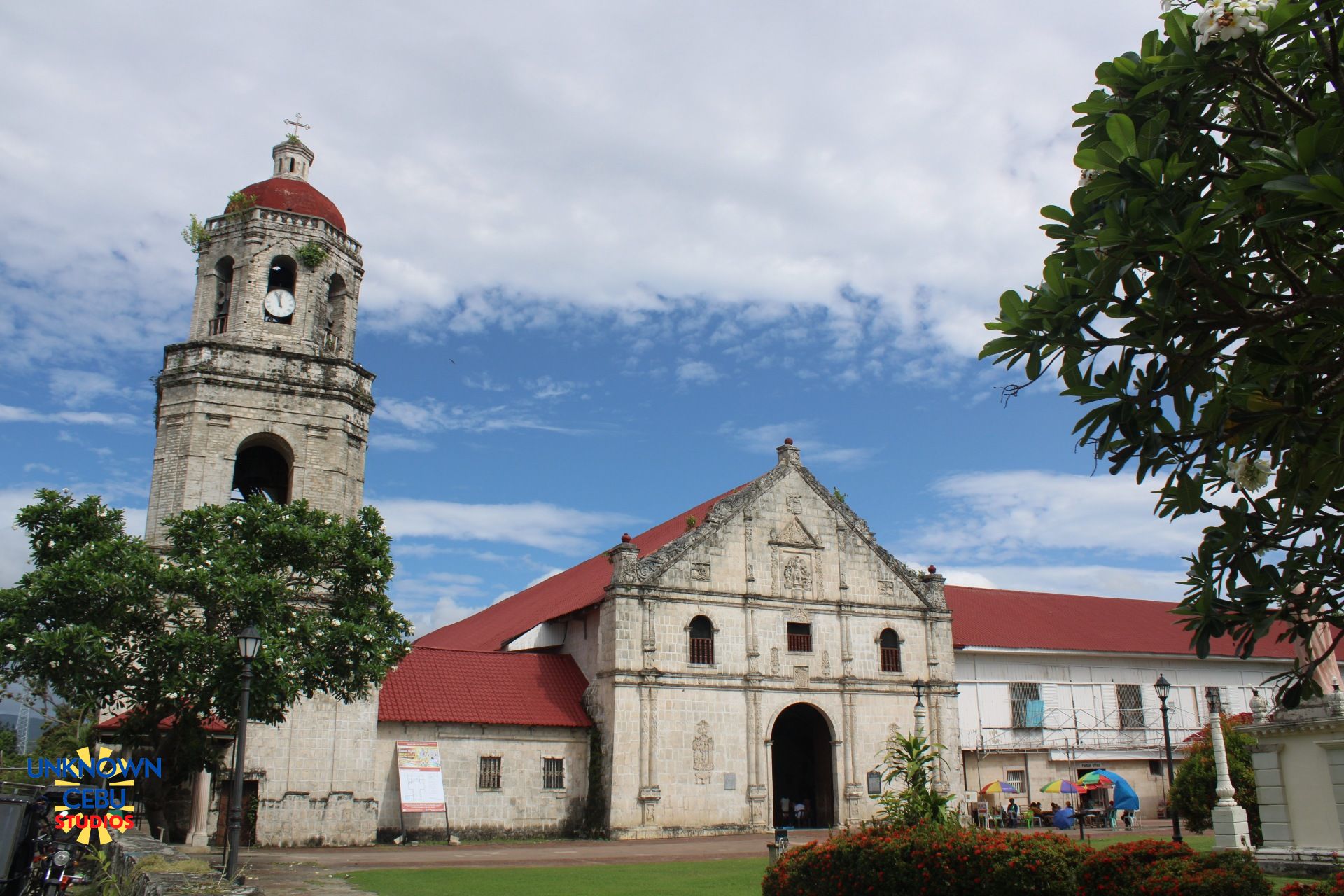
Bantayan island today is a place awash with the rampant walk and talk of tourists; known for the beautiful white sand beaches which are most prevalent in the southern town of Santa Fe. What most tourists do not know and to some extent some locals do not know is the rich and bountiful history that abounds the tropical paradise island. All around the island, hidden among thick tree cover and standing proudly in the plazas are historical sites just waiting to be studied and appreciated, such is the state of many heritage sites in the Philippines. There are many events in the history of Bantayan which in it of themselves may warrant a deep dive investigation, however one tragic event, and our topic here is the Great fire of April 16th 1973. A fire which was one of the most devastating events in terms of loss of historical areas in the Philippines,
Every Holy Week in Bantayan is a great occasion with the whole island participating in the traditional Pasos. The Pasos or otherwise known as the “Pasos De Cuaresma” is the tradition in which families will process images of Saints, holy figures and most importantly images of Jesus as he goes through the Passion of Christ. These images carved usually in wood or ivory or a mix of both are heirlooms that are highly treasured in the family that they are entrusted to. The family has the responsibility to take care of these images while not in the public eye and also to decorate the hand drawn carts called ‘Carroza’ during the Pasos.


The Carroza are large carts that have intricate designs on them, whether carved or done in the traditional manner of ‘puk-pok’ where a craftsman hammers in the design onto a metal sheet which is then fitted onto the body of the Carroza. Those who are confined to their homes set up candles or altars in front of their home prior to the processions. The faithful process around a designated route passing through the main thoroughfares of the town all the while praying, singing, and some even wailing to express their grief. It is this tradition and faith that still lives on today that makes Bantayan so renowned for their Pasos. One that has been part of the island’s culture for nearly three centuries.


=The Fire of 1973=
Late in the morning of April 16, 1973 a small tanker filled with flammable kerosene that was parked near the town plaza was set ablaze by an apparent electrical fault which caused it to violently explode. The people panicked and told the driver to quickly escape, but it was already too late and the fire began to spread. The explosion was a spark that caused a catastrophic conflagration that began in Barangay Suba. First ate consumed the century old houses in that area before rapidly moving northward, mercilessly consuming the ancestral houses which alone was already a great loss to the people of Bantayan. At this time, the fire spread around the barangay setting alight. The Mayor and Fire chief sent a telegram to the Provincial Governor at the time Vicente Rama.
As noon passed giving rise to the early afternoon set in a large portion of the town was going up in flames. The families of those whose houses were not immediately consumed in the raging inferno were scrambling to save what they could and what was the first thing on the minds of those with heirloom images? of course, to save them above all else. Many rushed to their cabinets, chapels and drawers to find the bits and pieces of their beloved Santos. Some even left their home without taking anything else other than the images.
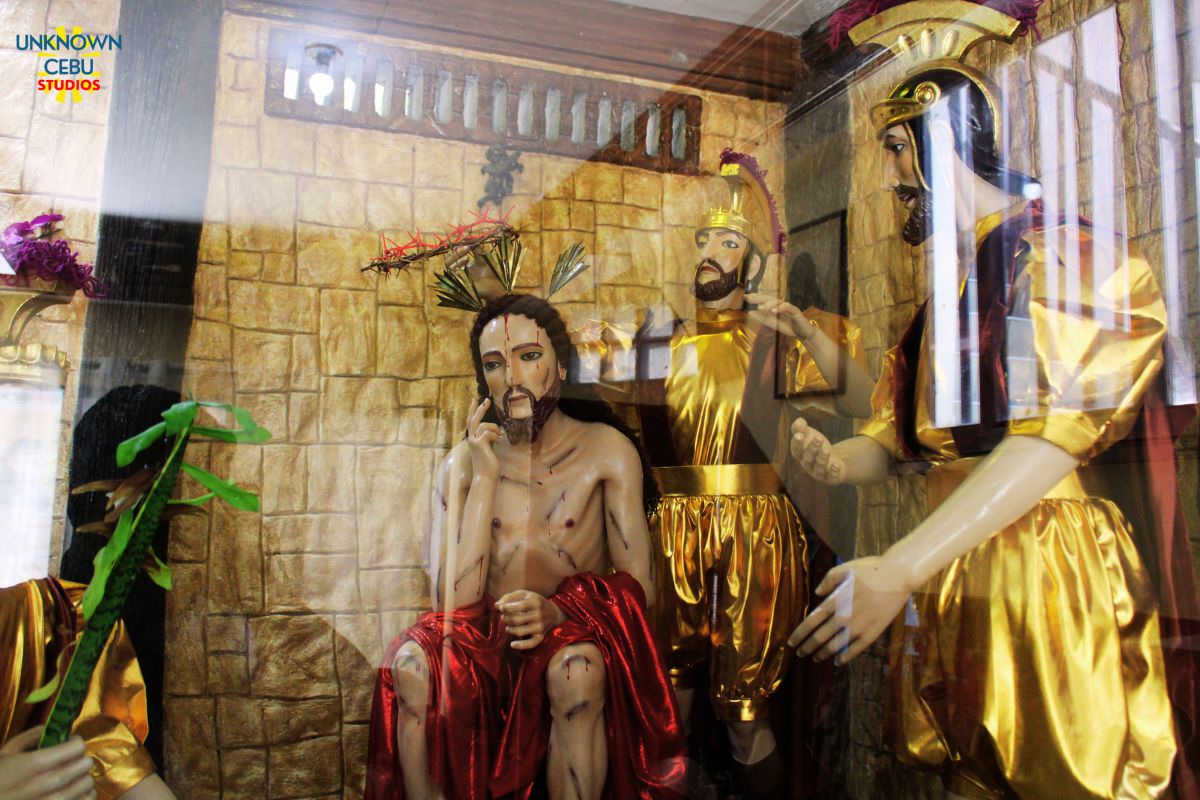
It was in this conflagration that the Du family of Bantayan, one of the most prominent in the area hatched a plan to save their prized image of the Señor De la Paciencia. The Señor De la Paciencia is an image of Jesus following his scourging as he sat in the moment after Pontius Pilate said the words “Ecce Homo” meaning behold the man. It has its position as the Crowning with Thorns. The image that is in the care of the Du family is one of the priceless heirlooms of Bantayan folk art that would have been lost if not for the quick thinking of the family members.


As the fire approached the Du ancestral house built by Du Bon Phao along with his wife Tomasa Ybanez Du which itself was standing for nearly about a century by the great fire of 1973, they sprung into action. The house was only a few houses from the where the fire started therefore there was not enough time to bring the entire set of the image of Jesus along with his Roman Soldier companions outside before the fire reached the home. The only solution that the family had to contend with was to lower the wooden image into the well found in the center of the courtyard before escaping. The fire was barely a few meters away from the house and approaching hot flames were making the task a great burden moreso especially with embers and smoke in the air, but it was a success and so the image, now submerged in the well survived the fire that burned all around it.
We lowered it (the image) into the well and left it there for some time as we brought other images and important documents out of the home.
-Member of the Du Family, 2022 (Translated from original)


“Among the ancient Spanish-style buildings that were totally razed to the ground were those of the Villacin,Escario,Opusa,Gillamac,Ybanez and Arcenas Families. The houses were built around the 18th century and were all centered in the Suba district which bore the brunt of the last conflagration”
-A news clipping from that time, 1973
After the fire had ended the Bantayanons still continued their Pasos even as half of the town lay smoldering as a smoldering ruin. Miraculously most of the 32 images used in the “Bantayanong Pasos” survived the Great fire of 1973 because of such measures taken by the Du Family and others. Though many a ‘Carroza’ were burnt in the process of the fire, there was still a sense of determination to continue with the Pasos. Because the fire occurred on April 16 which was Holy Monday there was little time to recover from the disaster when on April 19 and 20, 1973 the processions of Maundy Thursday and Holy Friday went around the still smoking ruins.

The ancestral houses of the affected families laid on the ground for all the people to see as they walked by, truly a tragedy to see the work of their forbearers laying where they once stood. During the Pasos many reportedly wept at seeing such a tragic sight. Even though a disaster had befell them only a few days before the people of Bantayan remarkably still pressed on with the Holy Week. That is a type of faith which sadly is not seen very much today, a faith that makes one love even as 700 families were left homeless and the town ‘Mercado’ or market was burned.
Today the image of the Señor De la Paciencia is kept inside a private chapel which until this day is under the care of the Du Family. After the fire; the family made it their mission to preserve whatever pieces of the house along with any heirlooms they could and incorporate them into a new home that was built on the same spot where their ancestral house stood. As a testament to this, the well into which the image was lowered still exists, well preserved with its old coral stone still used to this day.

UnknownCebu – Revealing our Heritage one post at a time
Sources: Personal interviews with a member of the Du Family and a Bantayan resident (June 2022) incl. 1973 Issue of The Republic News
Sources: Nacorda, C. G., Rebayla, G. B., & A., J. M. A. (2016). Bantayan: Passion, devotion, tradition (1st ed., Vol. 1, Ser. 1). University of San Carlos Press.
Sources: Nacorda, C. G., & Rebayla, G. B. (2016a). Handumanan: The Rosita Rodriguez-Arcenas collection of Visayan Santos. University of San Carlos Press.


One comment on “The Great Bantayan Fire of 1973, a well and the Señor De la Paciencia”