Water is an essential resource for civilization to exist. Life cannot exist without the presence of a source of fresh water. Early civilization started out close to rivers like Mesopotamia. The Philippines with it’s abundant natural resources ranging from mineral to wildlife is a very conducive place for civilization. With the tropical climate of the Philippines, waterfalls, rivers and other bodies of water exist on the 7,000 + islands. Life flourishes through these water bodies. In the past our ancestors relied on caves or springs with fresh water flowing freely to survive. With the arrival of the Spanish wells became a common sight. Digging and drilling to underground reservoirs was the catalyst to starting a community. Without water, communities stay small or don’t exist at all.
Cebu has plenty of springs and waterfalls like Gakub Cold spring in Dalaguete or Kansanto spring in Badian. Other than these there are some towns which still have their centuries old wells. To attract people to the Poblacion (The town center) and also for the convenience of the citizens. Wells were located within church property or somewhere very close. Since the church was the center for the community with most citizens in walking distance, the community well became a sort of center for the community as well. These would later be known as “Community wells” which of course would differ from private wells constructed by individual families. There are heritage wells scattered around Cebu most notably in Argao, Dalaguete, Boljoon, Talisay, and Fort San Pedro. These “Community wells would be our subject for today.

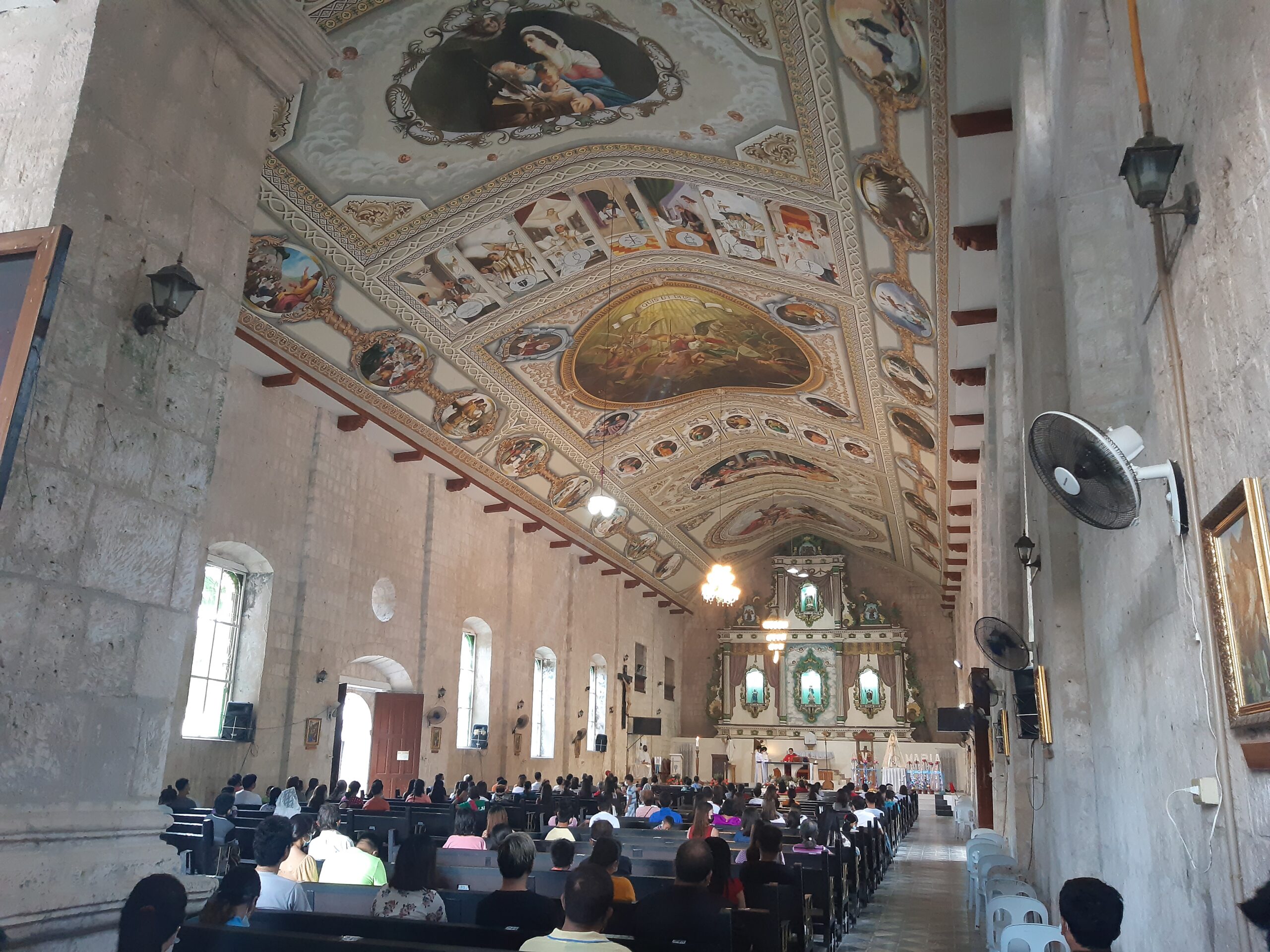
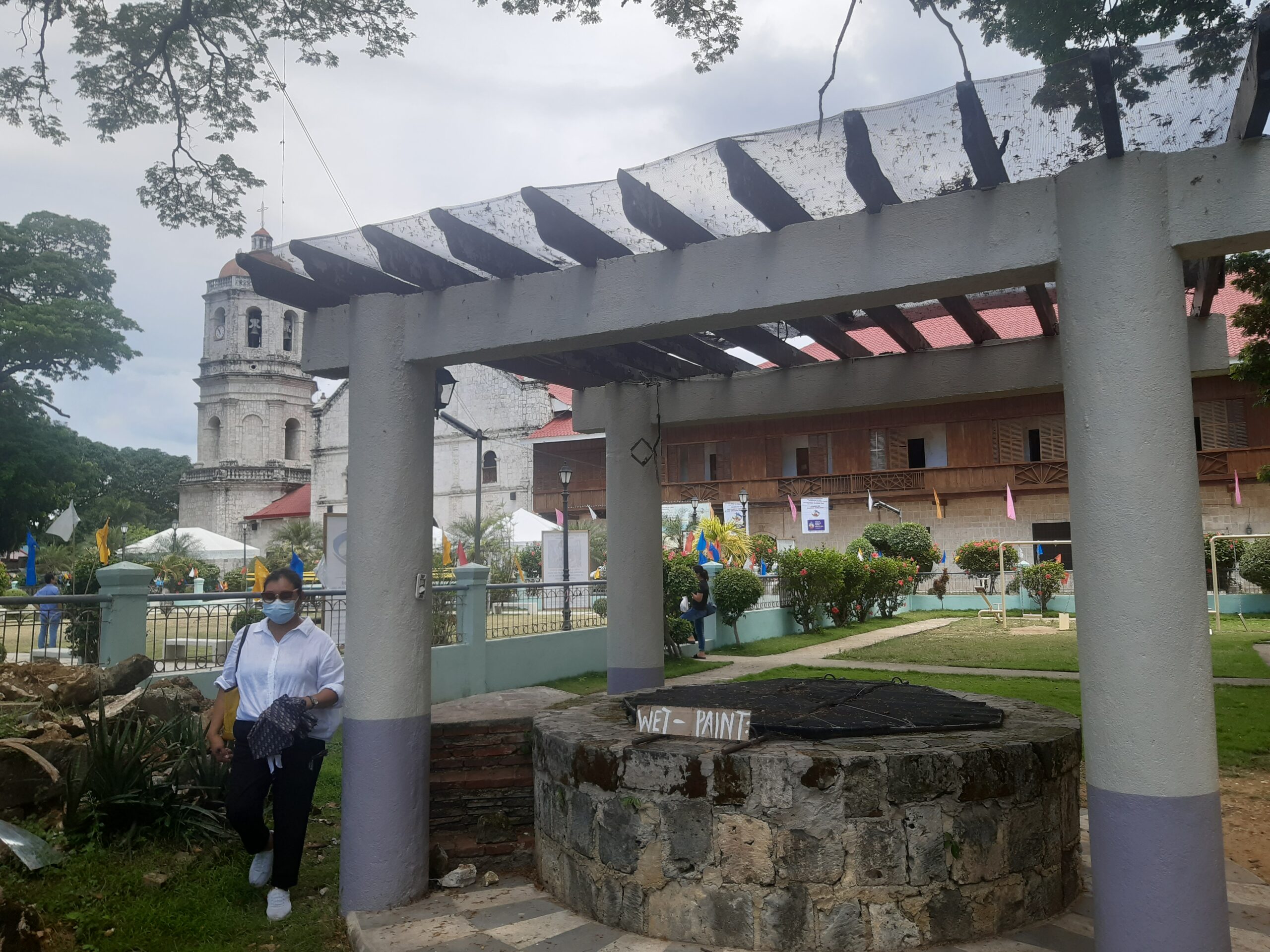
The first heritage well we will see is the Heritage well of the Municipality of Dalaguete. Dalaguete’s church is one of the grand old Spanish churches of Cebu built from 1802 to 1858. It was once a visita of neighboring Carcar before it became an independent parish in 1711. The name of the town may come from the “Dalakit” tree found nearby judging from notes dating 1668. The church complex contains many areas including the plaza and the easily missed heritage well if you aren’t keen. This heritage well is made of cut coral stones like the church behind it. This heritage well is located in the middle of the Poblacion allowing for easy access. The water today looks dirty, but with a bit of cleaning, it could probably still be drinkable. Beside the well are 3 stairs made of brick which was not a common building material in Cebu at the time.

The next heritage well is in Argao just north of Dalaguete. This heritage well was built around the same time as the church around 1788. It was once made of coral stone like the heritage well of Dalaguete. Unfortunately it looks like the parish or someone who does not understand how to preserve heritage structures, plastered over the coral stone with another type of stone. Nonetheless this heritage well still retains most of it’s originality being located right in front of the church in the Poblacion. Under this well is a spring that was once accessible with a concrete staircase which is now gone. On the plaque it reads “This Community well was the only source of drinking water for the people of the Poblacion. It served as the focal point. It was built using octagonal shape, faced with coral stones. There was free flowing water during high-tide. The site used to have a concrete staircases that led to the spring itself.

The last heritage well we will be looking at today is this one in Talisay city. Located right beside the Church in the Poblacion it is no longer within church property as a family has bought the land. Fortunately they decided not to destroy the heritage structure and instead reused it. Sadly, what would have been a layer of wood and Coral stone has been plastered over with concrete. Interestingly this well, unlike the others, has a date and small inscription to go along with it that reads “Talisae. 16 de Mayo AEUS ad 1861 A—. Talisay is known as the aqua city of the south because of the abundance of beaches and water sources.
These heritage wells, although they are of a lesser priority than bigger structures, are still an important part of history. Without them some communities may not exist. Maybe one day people will begin to see the beauty and preserve and maintain them.