In the island of Cebu Spanish era churches are common in many municipalities across the island but their designs usually follow a common design of Belltower-Facade-Convent or some variation of that but the status quo is that layout, but the church of Talisay follows another layout, I will be explaining how the church is different not only in layout but also in architecture from most of the churches in Cebu.

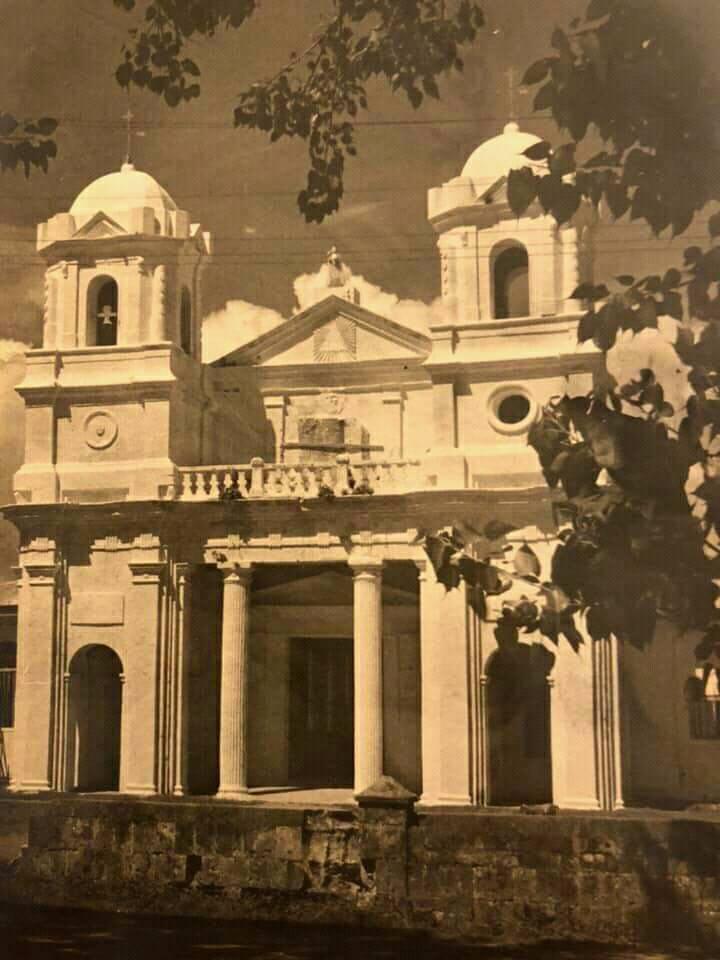
An archival photo of the church as it was in the early 1900s. Like most churches in this province, the structure is made of coral stones. The Kumbento used to stand in line with the facade but during World War II, it was bombed and totally destroyed by the Americans to flush any Japanese hiding or planning an ambush. The presbytery and nave also suffered while, luckily, the facade including the two side chapels of which one might be the baptistry were left damaged but not destroyed
Talisay was once an augustinian estate thus the church of Talisay was run by Augustinian priests in the first 100 years. The church of Talisay was built in 1848 through the efforts of Fr. Juan Soriano. The church is made of cut coral stone with arched windows on the side, the shape of the church is in the normal cruciform shape. The church underwent renovations in 2007 under Msgr. Tajanlangit. The baptistry and candle lighting area survived world war 2 and can be seen in vintage photos right behind the facade.
The reason why the Talisay church is architecturally unique is because of the twin belltowers that flank the facade and allow a portico to be built. Twin belltowers in Cebuano churches can be seen in many places like Minglanillia, San Fernando Bogo and Tuburan but only Bogo has something very similar to Talisay with the portico and recessed facade but!, The design of Bogo church is relatively new only being built in 1927 while the Talisay church was built in 1848. The two belltowers are identical in width height and design aside from one belltower having the hapsburg eagle symbol while the other only has a empty space. The belltowers have 3 floors the first being the foundation with arches, the second floor has the aforementioned eagle and the other belltower only having an empty space, the third floor of the belltowers is arched but you can see the bells’ wooden platform. The roof is a dome made of red brick and a weather vane tops both belltowers. The entirety of both bell towers are embellished with designs and columns. The facadeis muted by the portico and belltowers but the Graeco-roman entrance can be seen and the trinity triangle can be seen at the top.

The inside of the church is impressive but lacking.At one point the ceilings of the church had beautiful paintings depicting scenes from the bible but at one point in the 1980s the paintings were whitewashed. The Retablo is basic with two staircases leading up to a singular cross with Jesus christ on i, the 2 Virgin Mary’s are on the flanks of Jesus. There are also 4 smaller retablos to the side. The transept of the church has a massive Chandelier.


hello deezdeez, my curiosity is piqued especially with your mention of a “hapsburg eagle” on one of the bell towers> can you enlighten me bit on the symbol’s significance? by the way, am so happy to see a colored, maybe ‘restored’ photo of the church and its adjacent kumbento. can’t thank you enough for posting the photo. i hunger for more of your historical discoveries and findings of our old storied past given the sad turn of events in this pandemia.
The double eagle “Hapsburg-inspired” symbol was adapted by the Augustinians. You will see this symbol in other churches that they established in the Philippines.
Thank you for commenting! I am new to studying Church architecture and i am still learning… Also could you give me an example of where you can see the same symbol thank you