
The story of the Immaculate Conception Parish Church in Oton, Iloilo, is less a chronicle of faith and more a tragic epic of architectural hubris battling geological destiny. Founded in 1566 as Ogtong, the town was the second Spanish settlement in the Philippines after Cebu, establishing its pivotal role as a strategic and evangelization foothold. The Augustinians formally institutionalized the mission in 1572, dedicating the parish to the Immaculate Conception. Yet, its early structures faced a relentless cycle of destruction: Dutch privateers razed the first permanent church in 1614, and subsequent fires and calamities necessitated repeated, costly reconstructions. This volatile history created an imperative: to build an edifice so grand, so imposing, that it would permanently assert the prestige and perceived permanence of the Spanish colonial empire in Western Visayas. This ambition would culminate in the massive 19th-century structure—the Old Oton Church—a National Historical Treasure tragically fated for a swift and total collapse.
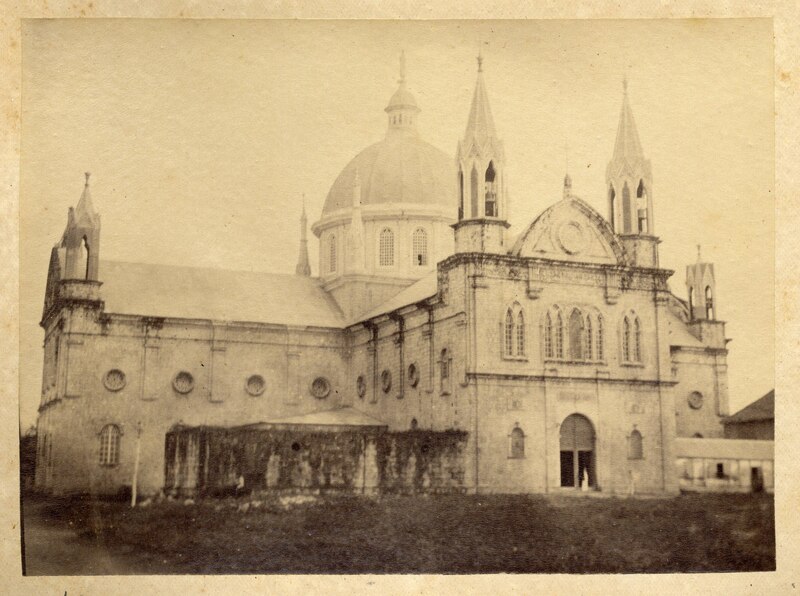
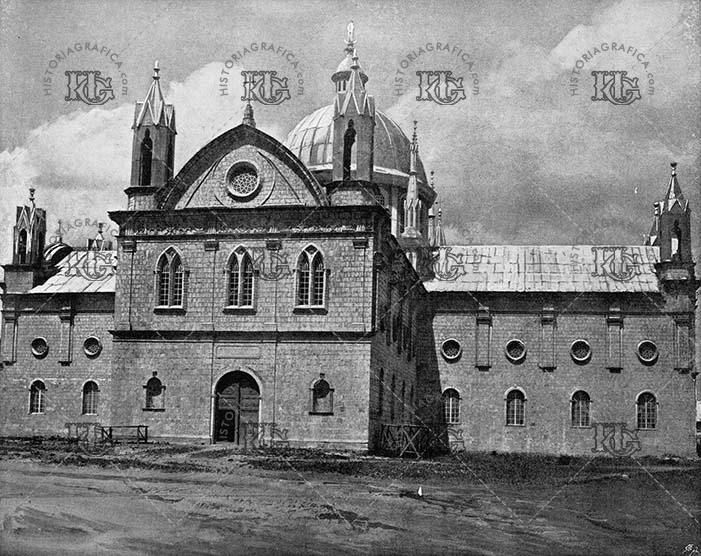
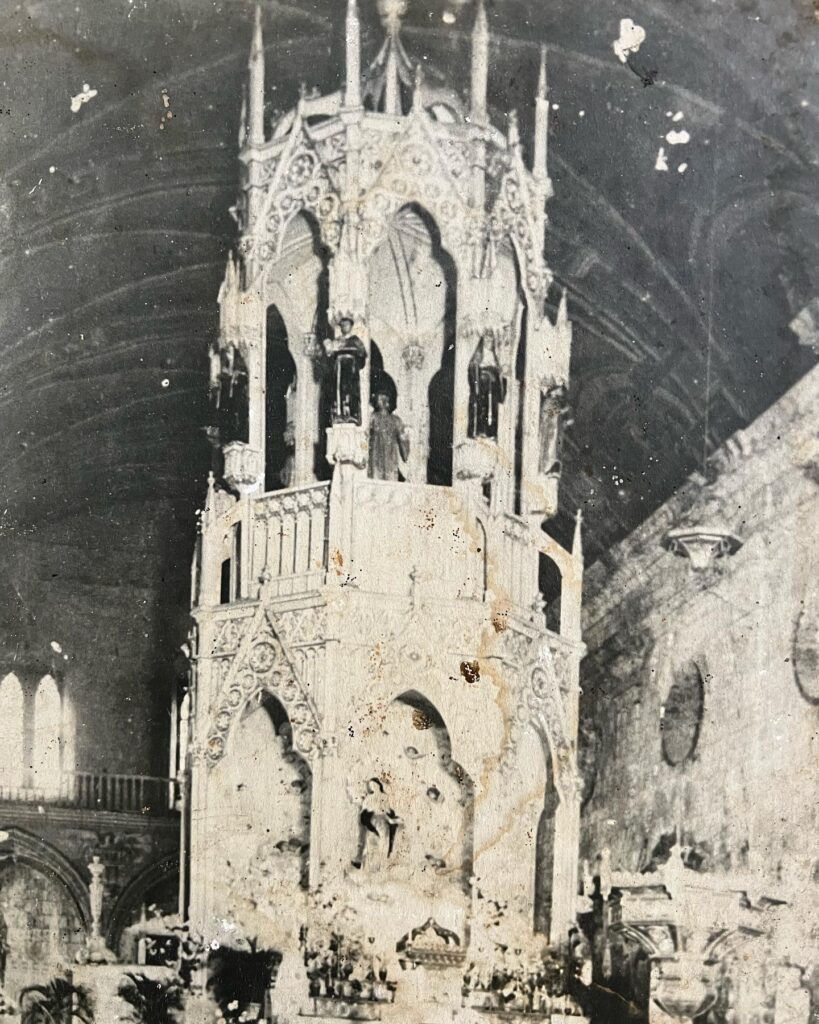
Oton Church in 1891(?). This is one of the earliest photos of the church. | Shelmerdane, E., CC BY 4.0 https://creativecommons.org/licenses/by/4.0, via Wikimedia CommonsThe Old Oton Church that rose from the ashes, finally completed around 1896, was a spectacular monument of colonial design. Classified broadly as Gothic-Neoclassical, it was a masterclass in eclectic synthesis, incorporating distinct Byzantine and Gothic elements. At a staggering 68.28 meters (224.0 ft) in height, flanked by six towers and a central dome, it was rightly considered “once one of the largest churches in the country.” However, the architectural choices were a structural death sentence in a seismically active region. Construction relied on unreinforced Coral and Limestone masonry—heavy, rigid, and utterly lacking the ductility required to absorb lateral seismic forces.. The combination of immense, brittle mass, soaring height, and structural complexity was a destructive force multiplier, transforming the monument intended for permanence into a highly vulnerable target for the inevitable ground motion. True, the church was a beautiful work reminiscent of those in Europe, however, it could be a reason why the church fell during the Lady Caycay Earthquake.
https://fotosdebarcelona.com/historiagrafica/picture.php?/3411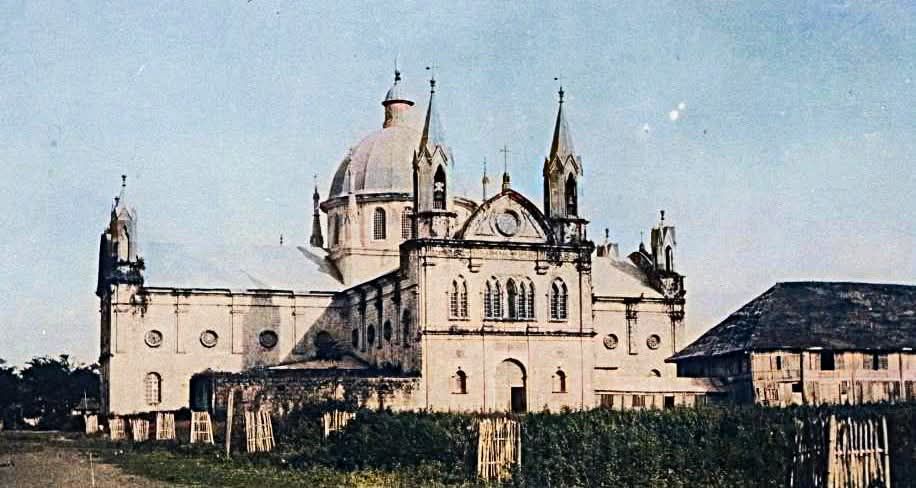
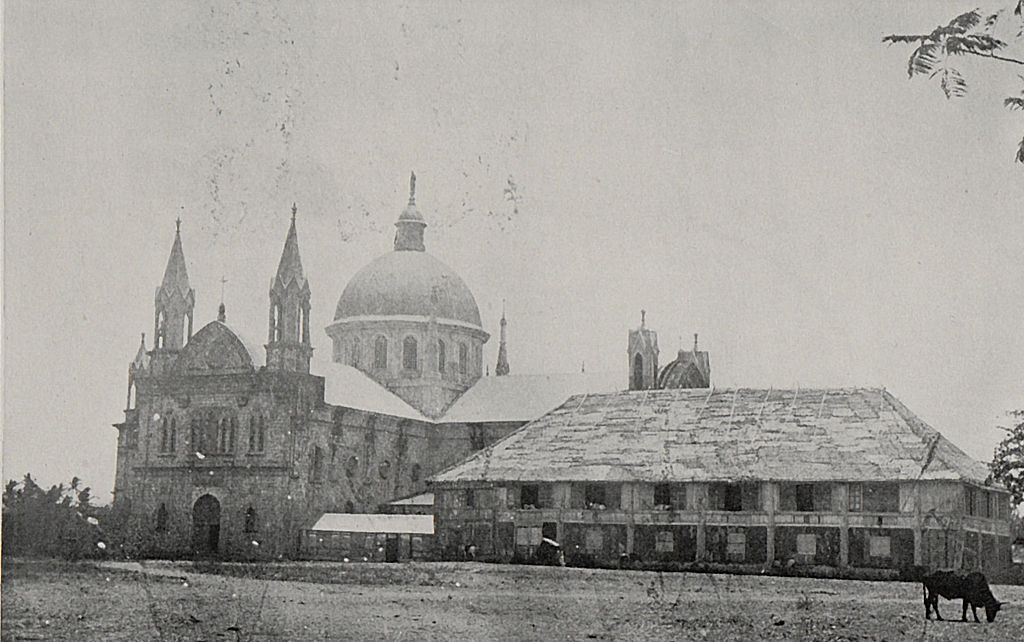
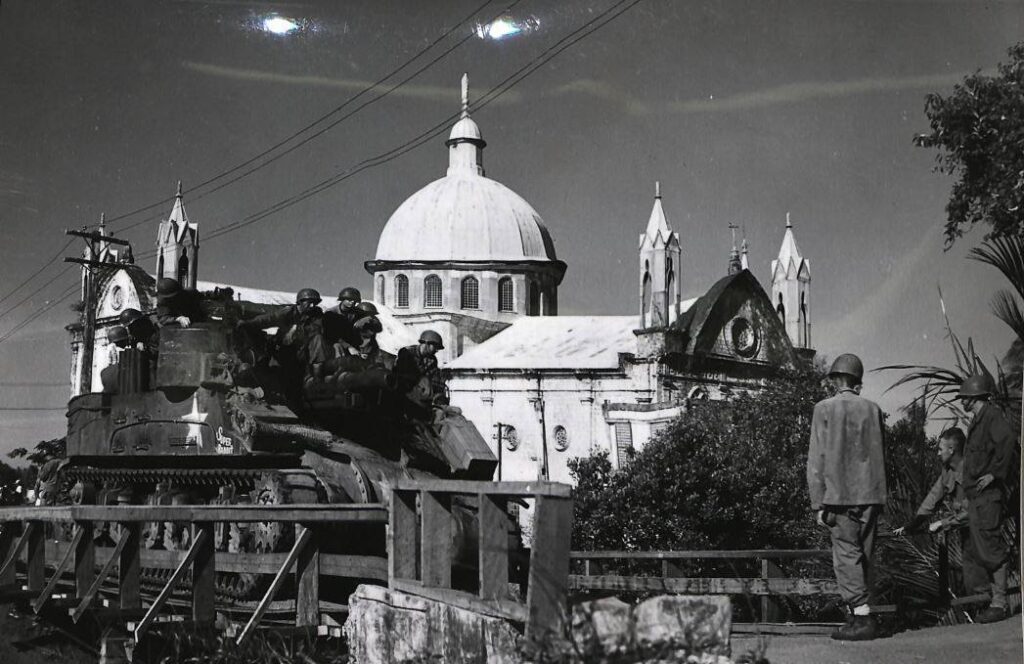
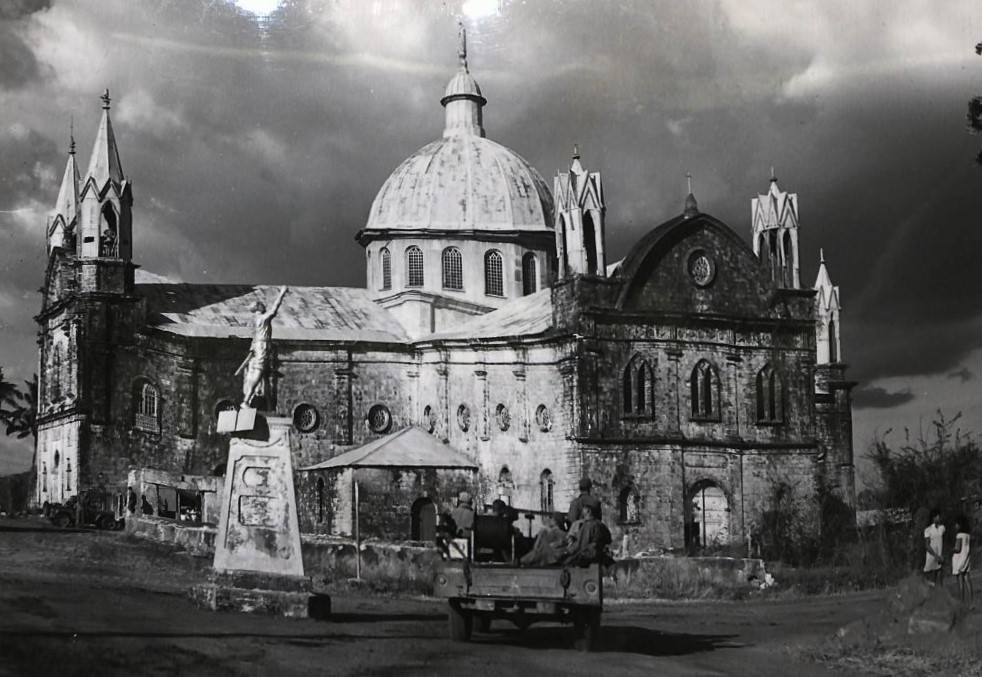
The prophecy of its structural failure was fulfilled on January 25, 1948, by the Lady Caycay Earthquake. This was not a minor tremor; it was a geological cataclysm—a massive event recorded with a surface wave magnitude of 8.2, placing it as the second biggest earthquake in the documented 500-year seismic history of the Philippines. The main shock, centered near Anini-y in Antique, subjected Oton to an agonizing three-minute period of violent, sustained oscillation. This prolonged shaking guaranteed complete structural fatigue.
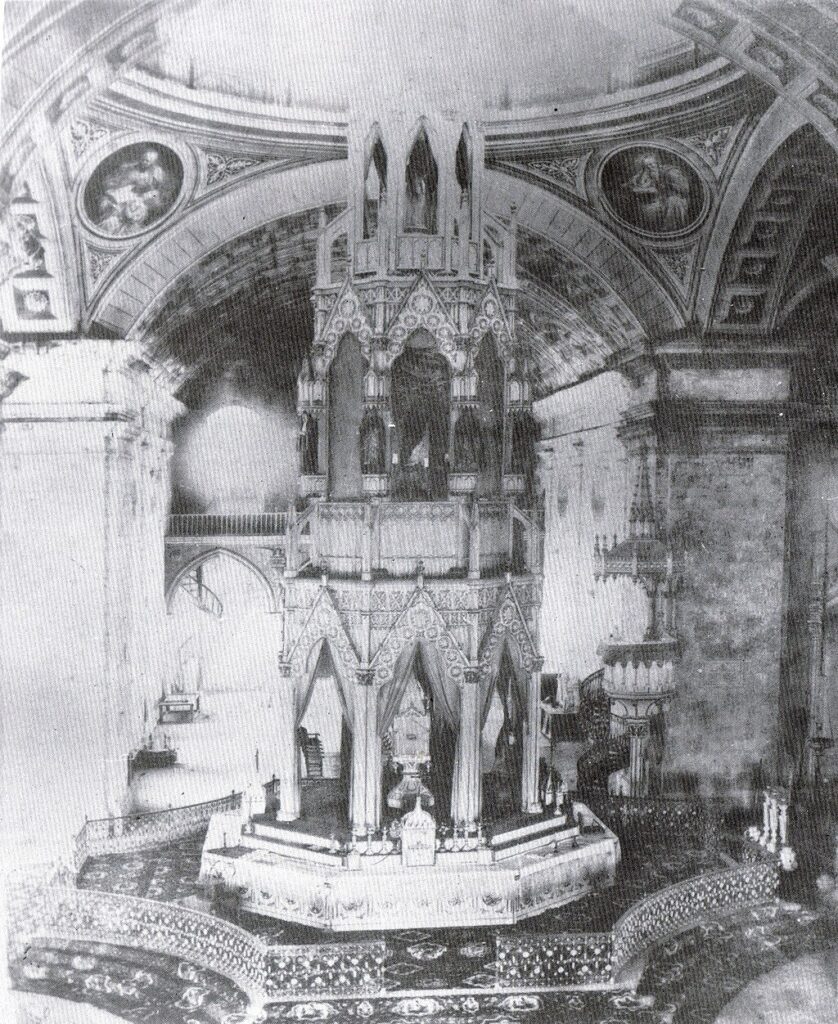
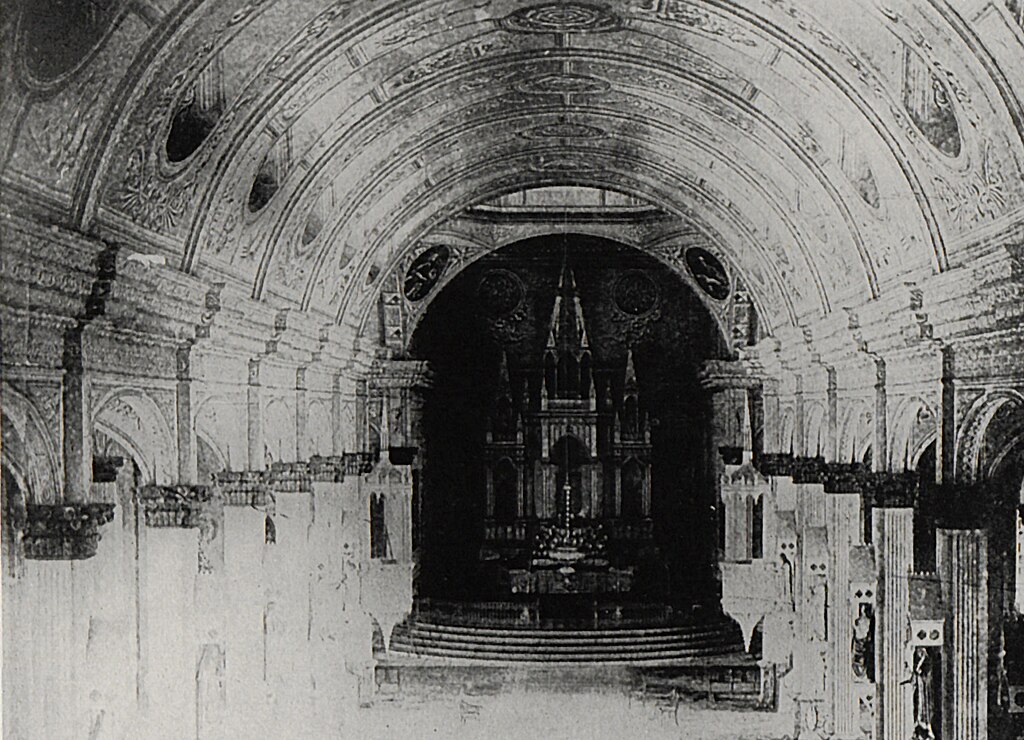
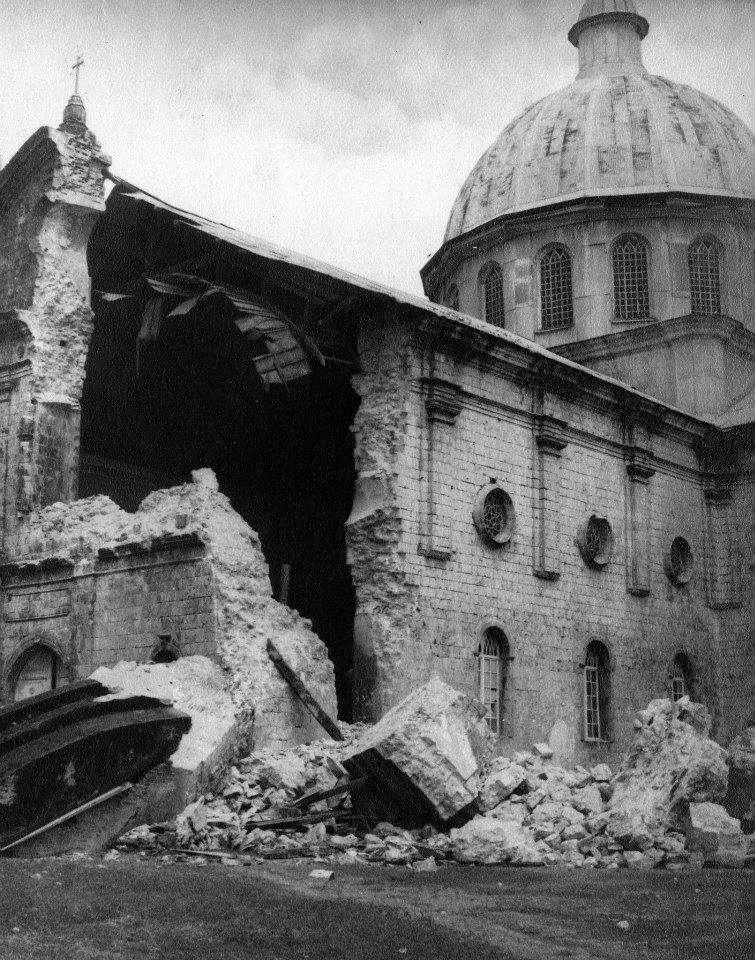
In Oton, the ground motion was amplified, reaching a maximum intensity of MMI X (Extreme) or PEIS IX (Devastating). The earthquake derived its local name, “Caycay” (Kinaray-a/Hiligaynon for ‘scratch marks’), from the widespread ground fissures, which were specifically observed in Oton’s streets. This evidence of site effects and potential localized liquefaction dramatically increased the stresses on the church’s heavy foundations. Under this devastating and amplified assault, the massive Gothic-Neoclassical colossus was instantly reduced to rubble. The sheer weight of the unreinforced coral masonry, coupled with the instability of the centralized Greek Cross plan, overwhelmed the building’s shear capacity. Official accounts describe the church as “severely damaged and reduced to rubble,” suffering a total structural collapse that necessitated its complete, non-recoverable demolition. The monument, once a symbol of the wealth of Iloilo, was physically erased, leaving only two bells and some stone remnants.
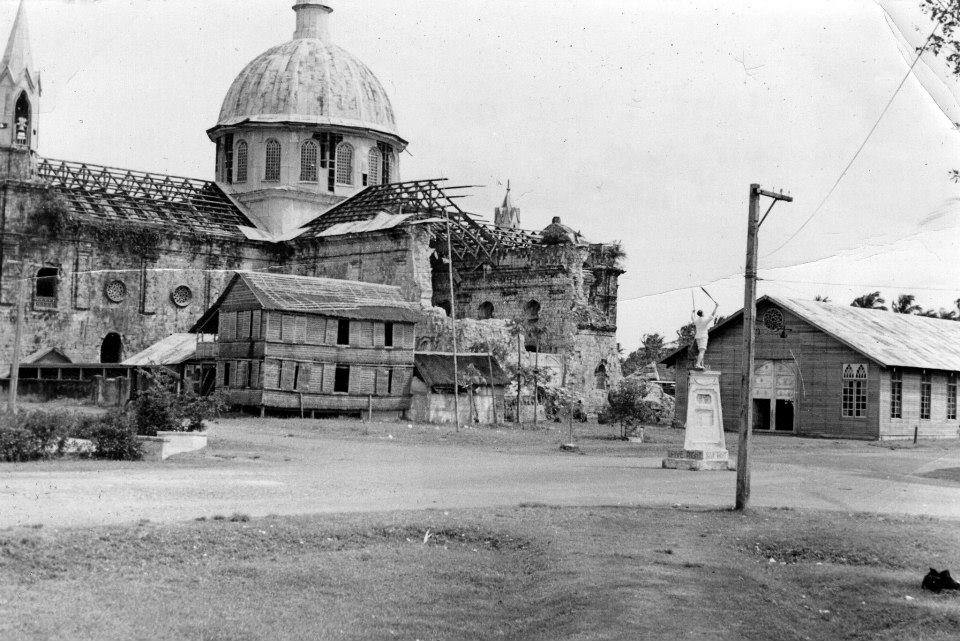
The rebuilding process, led by Fr. Ernesto L. Calvo—Oton’s first Filipino parish priest—marked a symbolic and structural break from the colonial era.Taking two decades to complete, the present-day Immaculate Conception Church was consecrated in 1972. It is a structure of its time: entirely modern, prioritizing light, space, and functionality, and utilizing materials and engineering techniques designed to avoid the catastrophic, brittle failure of its predecessor. The most striking features are the huge stained-glass windows, including a full wall of glass framing the sanctuary and the dramatically backlit Christ the King crucifix.
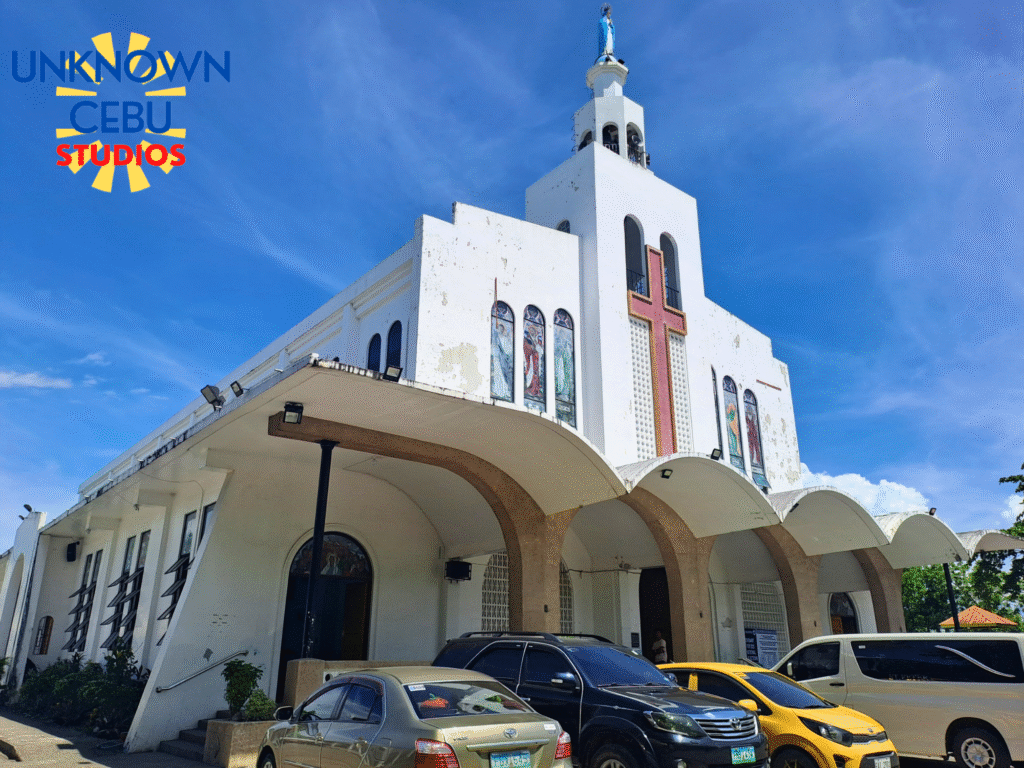
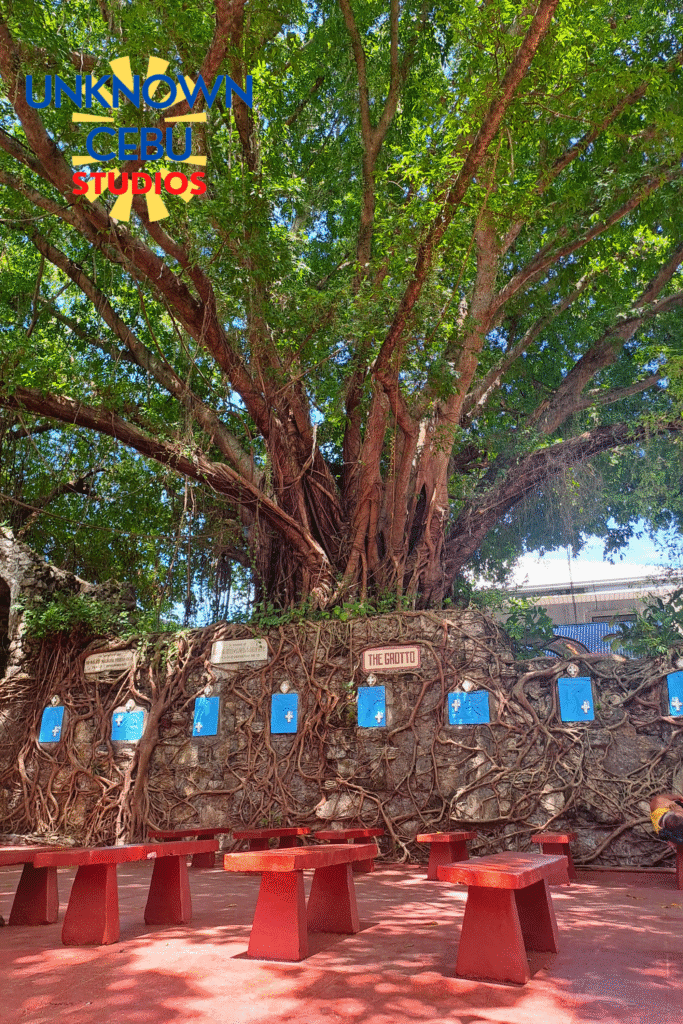
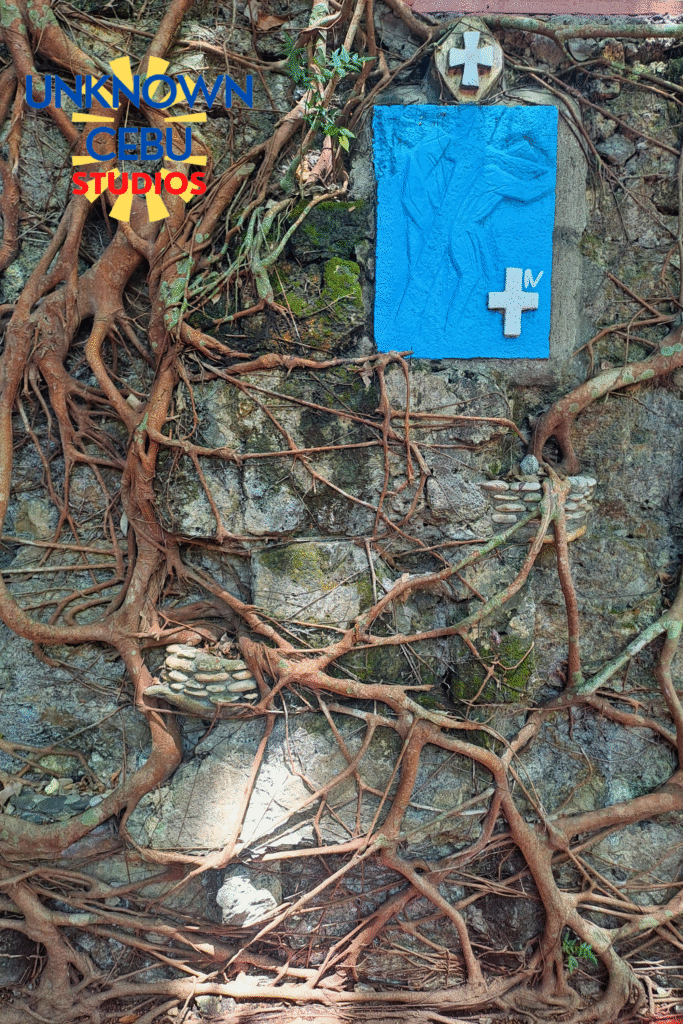
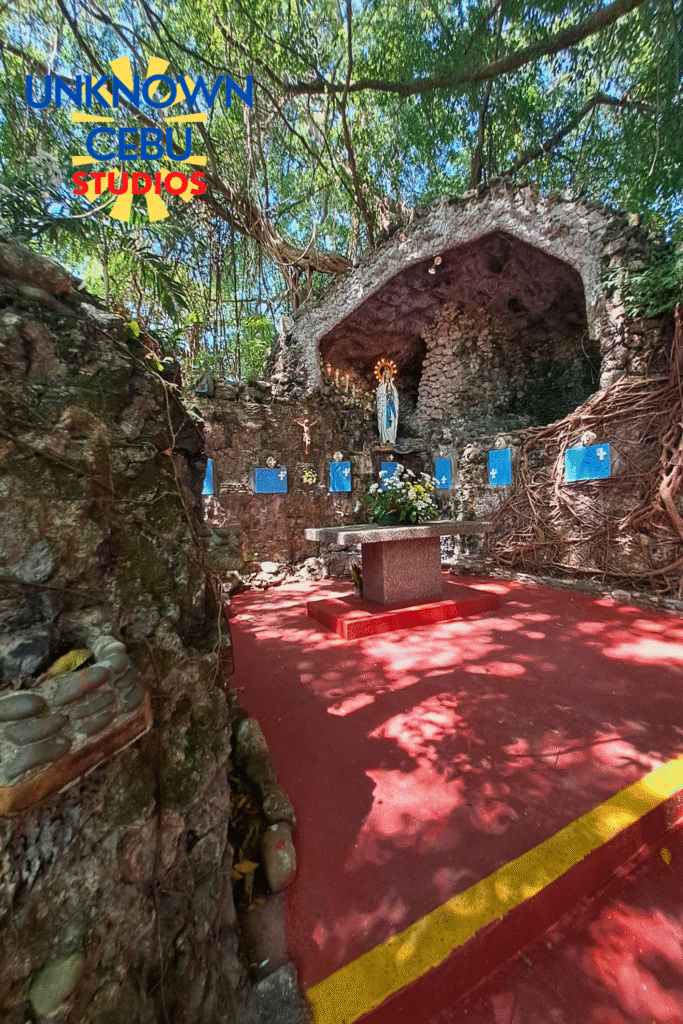
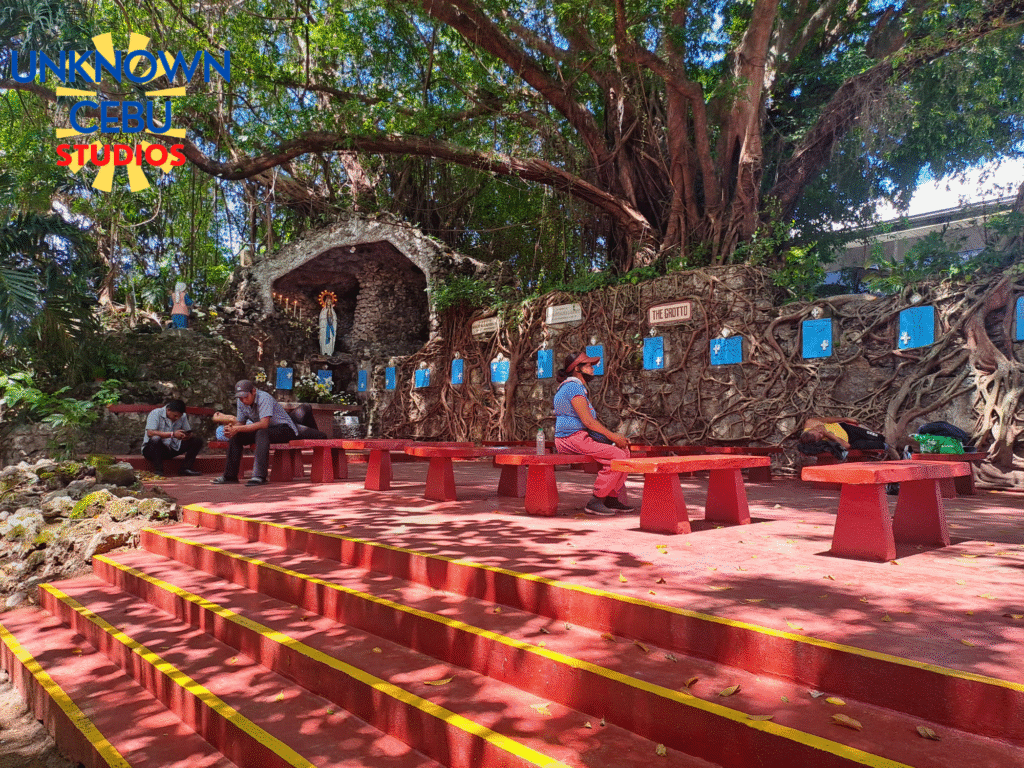
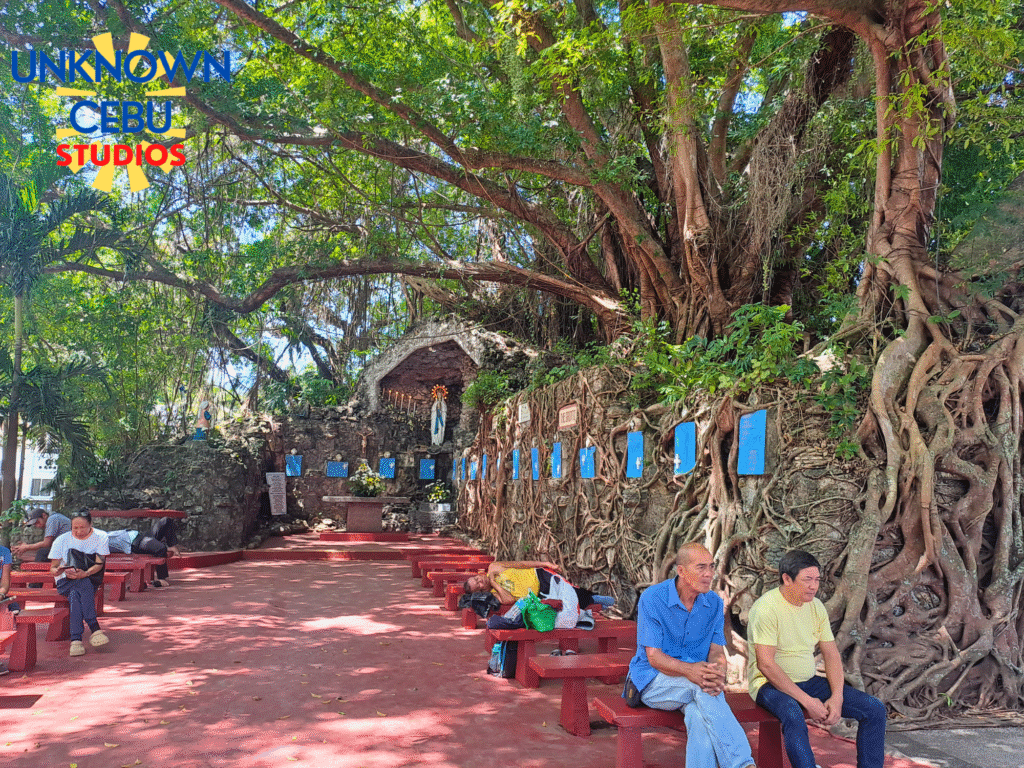
Today, only ruins remain of the original church. A small grotto on the left side of the modern day church which are visible as you enter the church property is all that remains. Coral stone blocks line the area and a mamposteria wall still stands.The legacy of Oton Church is thus a profound and cautionary tale: a magnificent colonial dream was undone by a massive geological reality, underscoring the fatal liabilities of grand, rigid masonry in a severely seismic Philippine landscape which urges us to consider how we build in the future.
Sources:
“Old Oton Church.” Wikipedia. Last modified November 25, 2025. Accessed November 25, 2025. https://en.wikipedia.org/wiki/Old_Oton_Church.
Augustinian Churches and History. “The Augustinians and Arevalo.” August 9, 2012. https://augustinianchurches.wordpress.com/2012/08/09/the-augustinians-and-arevalo/.
SlideShare user. “The Old Historic Church of the Immaculate Conception in Ogtong (Oton), Iloilo.” SlideShare. Accessed November 25, 2025. https://www.slideshare.net/slideshow/the-old-historic-church-of-the-immaculate-conception-in-ogtong-oton-iloilo/32648974.
Jude Mangilog. “Oton.” Posts Tagged ‘Oton’. Gazing In and Out (blog). Accessed November 25, 2025. https://judemangilog.wordpress.com/tag/oton/.
“1948 Lady Caycay earthquake.” Wikipedia. Last modified November 25, 2025. Accessed November 25, 2025. https://en.wikipedia.org/wiki/1948_Lady_Caycay_earthquake.
Bautista, M.L.P., B.C. Bautista, I.C. Narag, R.A. Atando, and E.P. Relota. “The 1948 (Ms 8.2) Lady Caycay Earthquake and Tsunami and Its Possible Socio-economic Impact to Western Visayan Communities in the Philippines.” Paper no. 029 presented at the Ninth Pacific Conference on Earthquake Engineering, Auckland, New Zealand, April 14–16, 2011. https://www.nzsee.org.nz/db/2011/029.pdf.
Becker, Chase M. “New & Old in Church Architecture: A Case Study.” PrayTellBlog, October 24, 2012. https://praytellblog.com/index.php/2012/10/24/new-old-in-church-architecture-a-case-study/.
“File:Old Oton Church Ruins and Grotto.jpg.” Wikimedia Commons. Last modified December 16, 2024. Accessed November 25, 2025. https://commons.wikimedia.org/wiki/File:Old_Oton_Church_Ruins_and_Grotto.jpg.
EarthquakeKit.ca. “The 1948 Lady Caycay Earthquake.” Earthquake Kit Blog, January 24, 2024. https://earthquakekit.biz/blogs/great-quakes/the-1948-lady-caycay-earthquake.
Nadimpalli, Krishna, et al. “Figure 6: Modelling of the ground shaking from the 1948 January 25, 1948 Lady Caycay Earthquake.” Diagram from “Strengthening natural hazard risk assessment capacity in the Philippines: An earthquake impact pilot study for Iloilo City, Western Visayas.” ResearchGate. Accessed November 25, 2025. https://www.researchgate.net/figure/Modelling-of-the-ground-shaking-from-the-1948-January-25-1948-Lady-Caycay-Earthquake_fig2_285482753.
Simbahan.net. “Oton Church Architecture.” Simbahan.net, June 3, 2010. Archived June 14, 2021. https://web.archive.org/web/20210614192013/https://simbahan.net/2010/06/03/oton-church-architecture/.
Simbahan.net. “Oton Church’s Stunning Interior.” Simbahan.net, June 9, 2010. Archived June 14, 2021. https://web.archive.org/web/20210614121248/https://simbahan.net/2010/06/09/oton-churchs-stunning-interior/.
Simbahan.net. “The Lost Church of Oton, Iloilo.” Simbahan.net, May 21, 2010. Archived June 16, 2021. https://web.archive.org/web/20210616032618/https://simbahan.net/2010/05/21/the-lost-church-of-oton-iloilo/.
Simbahan.net. “Oton Church Ruins Today.” Simbahan.net, October 31, 2010. Archived August 4, 2021. https://web.archive.org/web/20210804184645/https://simbahan.net/2010/10/31/oton-church-ruins-today/.
University of Wisconsin Library. Digital Collections Search Result. Accessed November 25, 2025. https://search.library.wisc.edu/digital/ASVW67HVTNU67I8P.
Ortigas Foundation Library. “Image Bank Database Search for ‘Oton’.” Accessed November 25, 2025. https://www.ortigasfoundationlibrary.com.ph/collections/image-bank-database?search=Oton.


