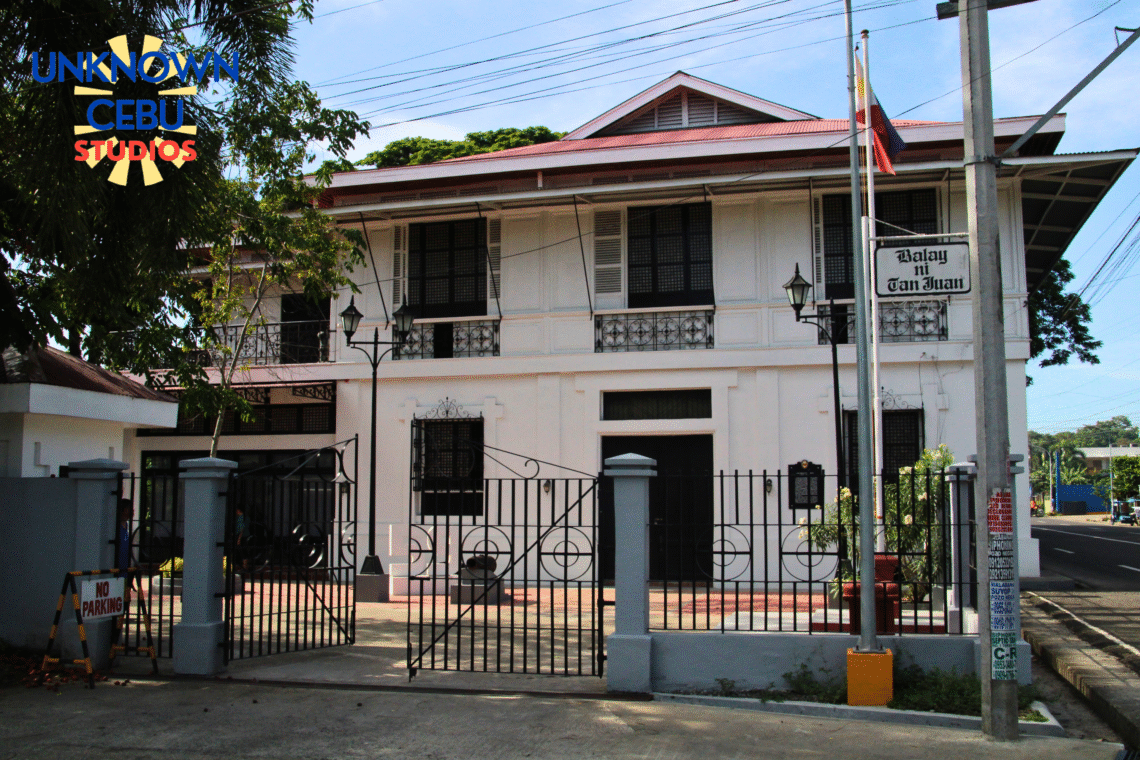
Balay ni Tan Juan stands proudly in the heart of Bago City, Negros Occidental, as one of the most important symbols of the city’s rich cultural and historical heritage. This elegant ancestral home, built in the late 19th century, was once the residence of General Juan Anacleto Araneta—the visionary leader of the 1898 Negros Revolution that freed the province from Spanish rule. The house, a classic example of bahay na bato architecture, features a coral-stone base and a hardwood upper floor that reflect the wealth and craftsmanship of the colonial era. |UnknownCebu| Its grand concave staircase, Capiz-shell sliding windows, and decorative ventanillas (small iron-grilled windows near the floor) are distinct hallmarks of traditional Filipino-Spanish design. Inside, one can still feel the stately character of a bygone time, with its wide plank floors, high ceilings, and antique furnishings that echo the refined life of a prominent 19th-century Negrense family.


Declared a National Historical Landmark in 1978 and restored by the city government, Balay ni Tan Juan now serves as a museum and cultural center that keeps the spirit of Bago’s past alive. The ground floor houses the “Kabuhi sa Bago” exhibit, which displays heirlooms, folk artifacts, and local crafts donated by the city’s barangays, offering visitors a glimpse into the daily lives of Bagonhons through generations. Upstairs, galleries feature photographs, documents, and memorabilia honoring the city’s most notable figures, including Jorge B. Vargas, Chief Justice Jose Yulo, and UN Undersecretary-General Rafael Salas. |UnknownCebu| Every year, the house becomes the heart of the Cinco de Noviembre celebration—Bago’s grandest festival commemorating the day Negrenses declared their freedom from Spain without bloodshed. The event brings history to life through cultural performances, historical reenactments, and local exhibits that fill the museum with renewed pride and meaning.


General Juan Anacleto Araneta, affectionately remembered as “Tan Juan,” was a brilliant sugar planter, reformer, and patriot. Educated in Manila and abroad, he was among the first to introduce modern agricultural machinery to Negros, a move that once led Spanish authorities to suspect him of importing weapons. On November 5, 1898, Araneta led thousands of sugar workers armed mostly with bolos and bamboo “guns” in a daring bluff that forced the Spanish garrison in Bacolod to surrender. His leadership not only ended colonial rule in Negros but also paved the way for the island’s brief independence as the Cantonal Republic of Negros, where he served as Secretary of War. In 1906, he moved his family into Balay ni Tan Juan, where he lived quietly until his death in 1924.
|UnknownCebuStudios|


