This is the third part of the Evolution of the Filipino ancestral house series. This third part will cover the very late Spanish period and the early period American era architecture in this part we will see the development of the Bahay na Bato into the Bahay Amerikano the stylized forms of the 1840s -1860s are developed and improved upon in the late Bahay na Bato and as American Colonization sets in, newer Architecture inspired by the previous Spanish and the new American colonizers will influence the houses built by Filipinos. This part concentrates on the transition from Spanish to American style houses and the effects of American Colonization on house design for the Filipino ancestral house.
The late Spanish-Early American Period (1870-1940)
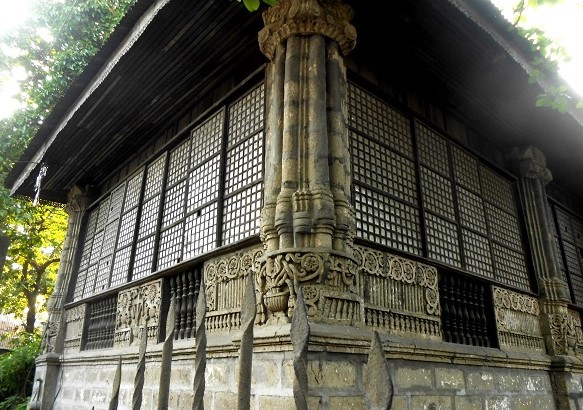
The late Spanish period was important in solidifying the Bahay na Bato style and further developing the Mid Bahay na Bato style of adding many architectural elements, most of which were stylistic. An important thing to note is that not many elements changed between the Mid-Late Spanish Period though a major difference was just the prevalence of them, meaning there were just allot more with many variations. According to Renacimiento Manila there are 4 types of late Bahay Na Bato the first was the The Board and Batten Style which was the oldest and one of the most common styles even before the late Spanish Period. The Flowers in Trellis Style which was one of the most elegant of the four and is similar to the Art Nouveau Style. The Platter Style which was simpler than the Trellis style but more elegant than the Board and Batten style. Finally the Horizontals and Verticals style which was the simplest, not having any designs instead opting for simple horizontal walls. Note that the Horizontals and Verticals style survived the war and was later used in many post war houses. These styles of ancestral house had already became common in the 1880s and more so until the Philippine Revolution. An example would be the Rizal house built in the early 1880s.

Ramon FVelasquez, CC BY-SA 3.0 https://creativecommons.org/licenses/by-sa/3.0, via Wikimedia Commons
During and After the Philippine revolution construction on more elegant and stylistic houses slowed down as the country was unstable it was only with the introduction of America that the construction and innovation of Ancestral houses would continue. The houses built in the early 1900s were the old bahay kubo style because of the lack of resources post war, it was only around 1910 when American intervention really began and spurred a large development in Ancestral house design, another problem was that the Philippines was neglected during the early American period. One house that is a symbol of this early period in my opinion is the Pelaez Ancestral house, though it was built at the tail end of this early period it was one of the first houses that combined some American elements and Late Spanish Period elements. It was built in 1918 and has elements of both the flowers in trellis style and the Board and Batten style. It is located in Cagayan De Oro.

This period in Ancestral houses is not very important as most of the Spanish Styles were created in the Mid Spanish Period, another reason is that because of the Spanish-American War ancestral houses built in the two decades between 1900 and 1920 do not exist or were destroyed. In some cases this time was a dark age in Ancestral house design we can see very little innovation as the architecture was already established, this resulted in the stagnation of architecture but soon a ray of hope came in the 1930s.


