In the heritage town of Carcar 30 Kilometers south of Cebu City are over 50 Heritage Houses many famous, like the Sarmiento Osmena House and the Jaen House where Leon Kilat was killed. (Note:The Jaen House is also called the Sato House)
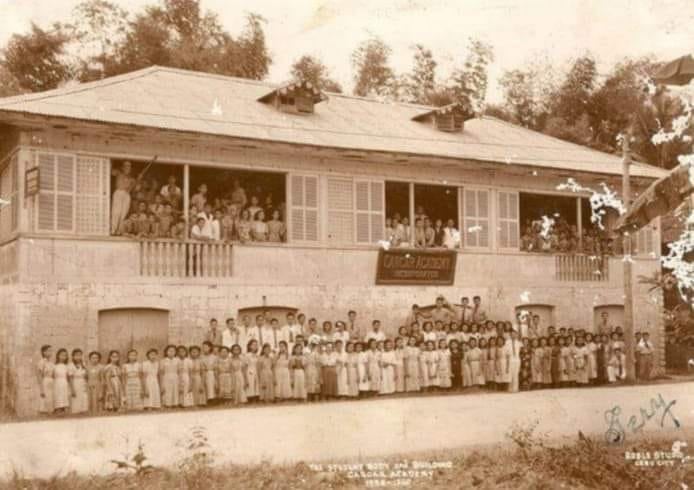
The heritage town of Carcar holds a Small secret in the form of the Sato Ancestral house built in 1890. The house is made of Hardwood and Coral Stone. The house is of rectangular shape with Capiz windows and two ventilation “tubes” at the top of the roof. The ventanilla are clearly seen below the window. The arches below the Wooden upper floor go inside the first floor of the house which most likely was a storage area. One of the Arches has the word Sato on one of them.

The Sato family is believed to have originally came from the neighboring island of Bohol and in records from 1910 the Sato family was spelled Satot. The sato family is now very large and prominent in Carcar.

During the 1920s to the 1930s the Sato house served as part of the Carcar academy. A vintage photo of the Sato house can be seen on Facebook. In the photo below the appearance of the Sato House has retained the same for over 70 years.


Hello,
I’m the daughter of Sato. My mother’s name is Esther Sato. She grew up at that house in the 1950’s. She moved away from the Philippines in the 1970’s. I would love to know more about the Sato family and see more photos if possible.
Melissa Sato Woods
There are many photos of the Sato Family around the internet i recommend you go to the Ancestral families of carcar website there is more information there.
Hi! If you would kindly give Melissa Sato Woods my email, I would be happy to connect and compare family notes, if she is willing. My father is a Sato who was born in 1908 in Carcar. He left the Philippines under difficult circumstances, so I know very little of his side of the family. Thank you!
Did you send an email to my gmail account? i would be very happy to help.
Sato is a Japanese surname used in Carcar, Cebu and Masahisa Sato the former Japanese defence minister has Visayan roots because his surname Sato 佐藤 is used there.