

Today we will be tackling the Gabaldon School Building, The year was 1907, Republic act. 1807 it was legislation passed by Isauro Gabaldon in the Philippine Assembly of 1907 it appropriated 1 Million Pesos for the construction of Public school buildings around the nation between the years of 1907 and 1915. Gabaldon buildings called as such because of the person who passed the legislation that made them possible, were designed by famed architect William E. Parsons who was famous for his work on Public buildings around the country. William E. Parsons designed many famous buildings like the Rizal Hotel in Manila and the Manila Hotel built in 1912. There were around 3,000 built and as of 2016 only 1,446 remain in good condition.

The Gabaldon building is remarkable as it was inspired by a combination of Traditional filipino bahay kubo and bahay na bato and American architecture. Like the Bahay Kubo the floor was raised and the building itself would stand on concrete stilts. Like the Bahay na Bato the windows were made of Capiz and there were intricate patterns in the walls to facilitate good ventilation. the Though Spanish era schools were already in the country these were limited to the Cities and large towns of the country. Gabaldon Buildings would be built anywhere in the country from the largest city to the smallest barangay. The building was not the end of the design process though as the standard plans stipulated that around the Gabaldon Buildings there were large fields and grass where children could play. The Gabaldon Building were built where the most people were in the city or Barangay and sometimes were built far away from the main Poblacion so that people from areas without Gabaldon Buildings could use the school buildings in near the Poblacion.
Each barangay or city would add its own spin on the standard design of the Gabaldon Building like the Gabaldon Building of Carcar in Cebu and the Gabaldon Building in Pampanga National Highschool. A standard size of 7 by 9 meters (23 ft × 30 ft) was conceptualized by Parsons for the school buildings regardless of the number of classrooms for swift construction of public schools. The buildings sat on wood or concrete foundations and in large cities were made of Concrete while in smaller barangays they were made of wood. Each Gabaldon Building would cost from 2,000-8,000 Pesos depending on the design and size. One Gabaldon building in Aloguinsan Cebu with the contractor Kipp and York built a standard plan 4 Gabaldon building at the cost of 8,294 Pesos.
- Standard Plan 1 would consist of one Classroom that would be able to fit 50 students and would be the standard 7×9 meters the cost was around 2,000 Pesos at the time
- Standard Plan 2 would consist of two classrooms that would be able to fit 100 students in total and the measurements were the standard 7×9 meters the cost was around 4,000 Pesos
- Standard Plan 3 would have 3 classrooms… So on and so forth
The plans were chosen based on the size of the community and the importance of the community for example if the community was projected to increase in size because of some trading venture or a railway would be built near it the size of the plan would match accordingly. The largest Gabaldon plans were reserved for large municipalities and were Standard Plan 20 meaning they could fit 2,000 Students. Some Gabaldon Buildings have been repurposed into barangay halls and assembly centers, some have been turned into office spaces. The Gabaldons are protected under Philippine law under Republic Act No. 11194 or the Gabaldon School Buildings Conservation Act. Under the law the “modification, alteration, destruction, demolition or relocation” of Gabaldon buildings are illegal. The particular legislation also designates the Gabaldons as cultural properties citing another legislation known as the Republic Act 10066.
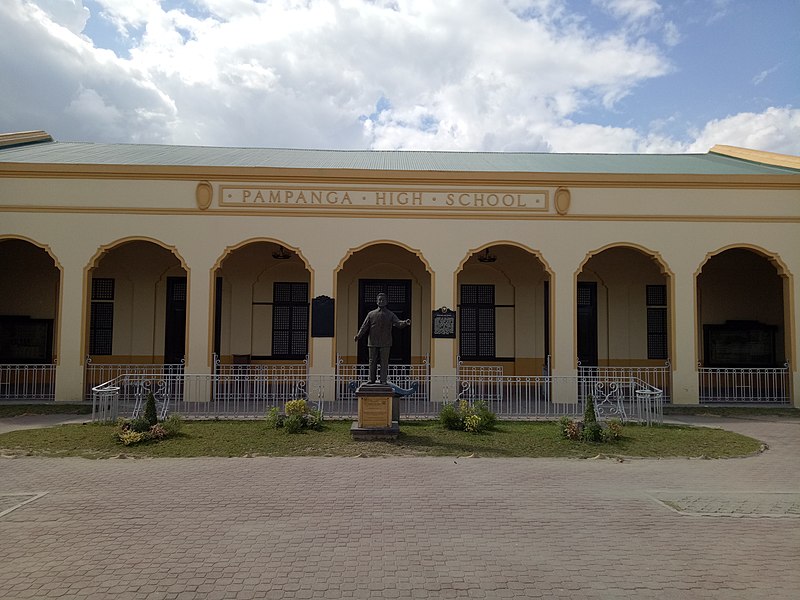
Gabaldon Buildings should not be forgotten as they shaped many a student from 1907 until today.
