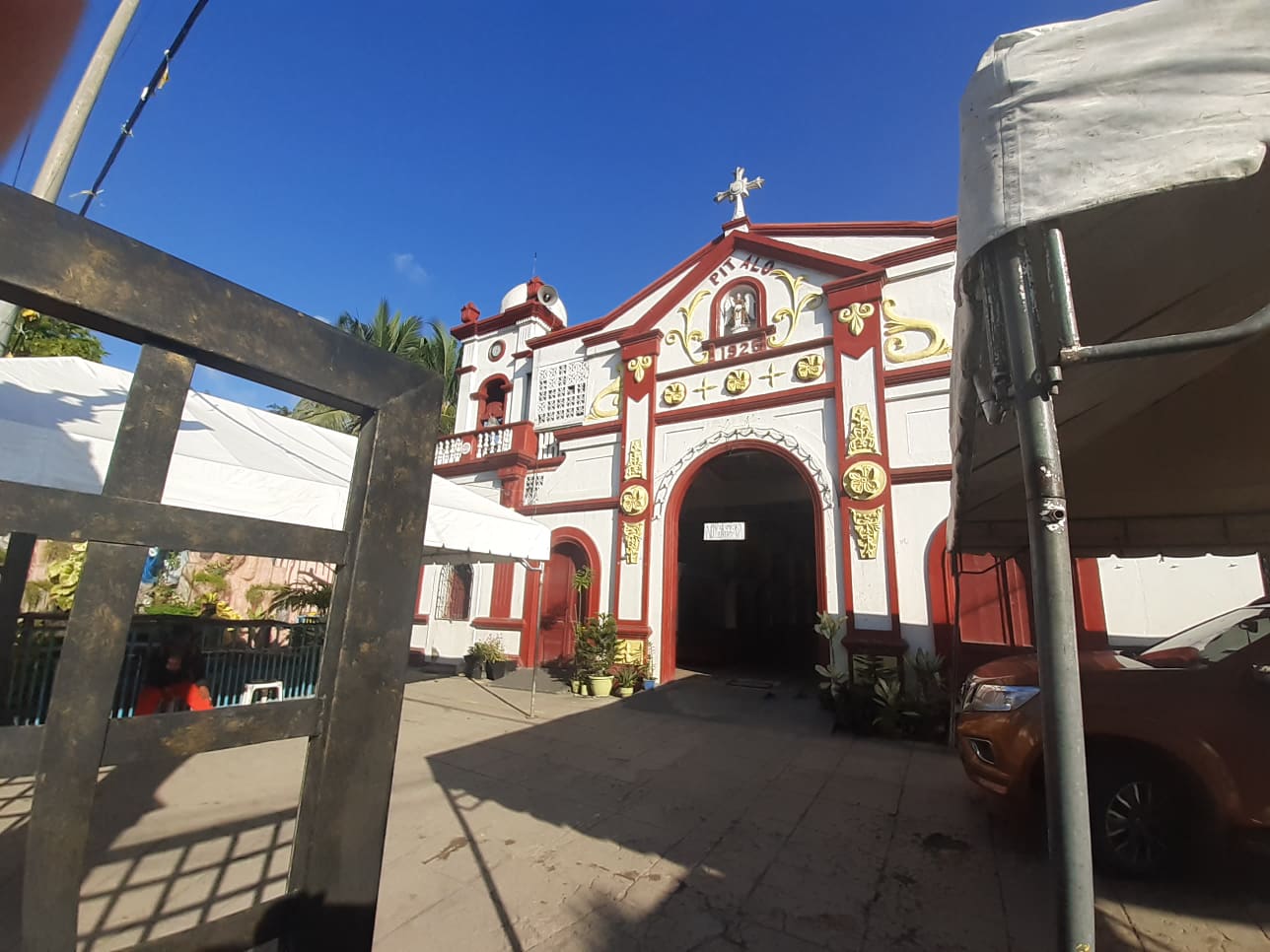
A humble place to me is a place or area where either the people or something built in the area represents or is supposed to represent something grand like a cathedral or a famous person, but in their own way they make it feel smaller and more down to earth. This is how I would describe the chapel of Pitalo, San Fernando.

Designed by an unidentified architect most likely a local. The church is a splendid revival of Spanish period baroque in the tail end of the American Period. The façade was built in baroque fashion with thick columns adorned with many carvings of leaves and other flora of nature being carefully and beautifully carved forming what is one of the many beautiful and awe inspiring church facades in Cebu. Beginning construction in the early 1920s maybe 1922-1924 the façade was the first part of the chapel to be finished as stated at the top of the front of the church below the image of Saint Vincent Ferrer. To the left of the façade is the small but still carefully designed belltower. Though not as ornate as the facade it still follows the color scheme and the design of the chapel. The belltower constructed 1931 doesn’t deviate from the style and architecture of the chapel. It still maintains it baroque design and inside is one of the old bronze bells of the chapel.


Inside the humble chapel its charm continues as many of the inside fixtures have remained the same for almost 100 years. When first stepping inside you are greeted by a old retablo, though I am not sure if this retablo is newer it at least is a good addition to the chapel. You should take some time to examine the door outside or when coming in as they are painted with the images of Saint Paul and Saint Peter. You should also notice the machuca tiles which adorn the nave until the altar, these were used from the Spanish period and became more popular in the American period. Although many inside fixtures are original many have been renovated or lost to time. One of which is the pulpit, where the lay would read scripture has been lost save for the abat-voix or the top part of the pulpit which still remains today.


Over the years many parts of the church have also been renovated, the roof and sides of the church have been expanded. Its columns have been topped with 1950s-1970s concrete designs and other renovations have lessened the authenticity of the church. That is also the situation of many other churches in Cebu, not just the large important ones need care, but also these smaller but still significant chapels and other heritage monuments. We must continue the candle before it is too late and gets snuffed out, and we must make a new candle from which a new flame can burn again.
SPECIAL THANKS TO: LANDEL FOR THE HELP IN MANY REGARDS