
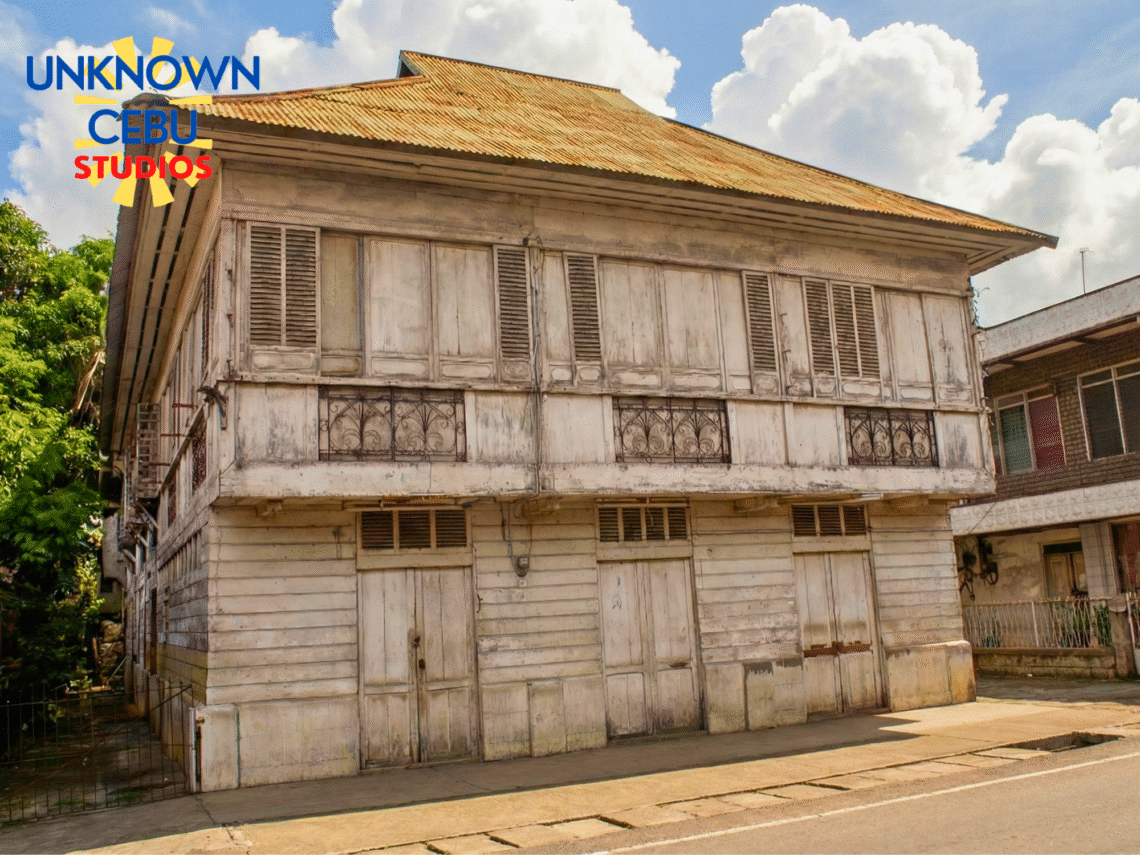
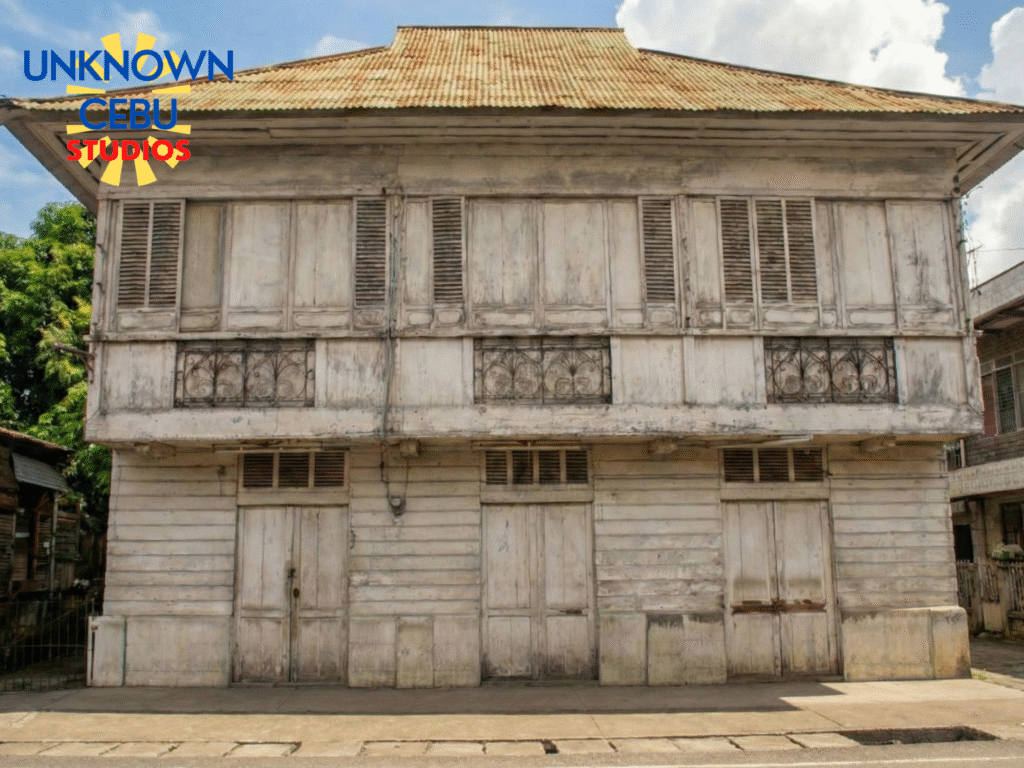
If you have ever driven down the southern arterial road of Cebu, past the bustling public market of Dalaguete and near the river that slices through the town, you have likely turned your head at a structure that refuses to be ignored. It is the Conrada Almagro Ancestral House; locals and wayfarers often refer to it simply as the “White House” of the Poblacion. Standing pristine against the often gray and dusty backdrop of the town center, this house is more than just a bright facade; it is a rigid, surviving sentinel of the town’s history. While Dalaguete is famed as the “Vegetable Basket” of Cebu and the gateway to the misty highlands of Osmeña Peak, the Almagro house reminds us that the town’s true foundation was built on the intersection of colonial commerce and local principalía power. Built around 1908, the house sits on land that has likely been a center of human convergence for centuries, dating back to when the massive Dalakit trees, from which the town takes its name, served as natural marketplaces for pre-colonial Cebuanos.
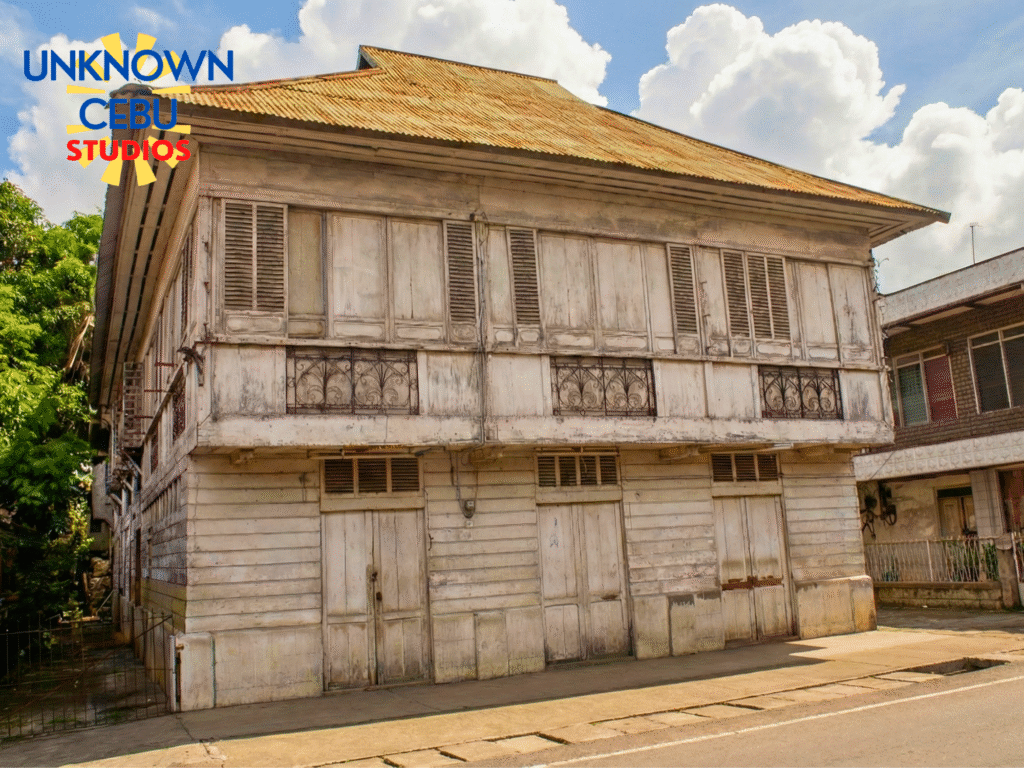
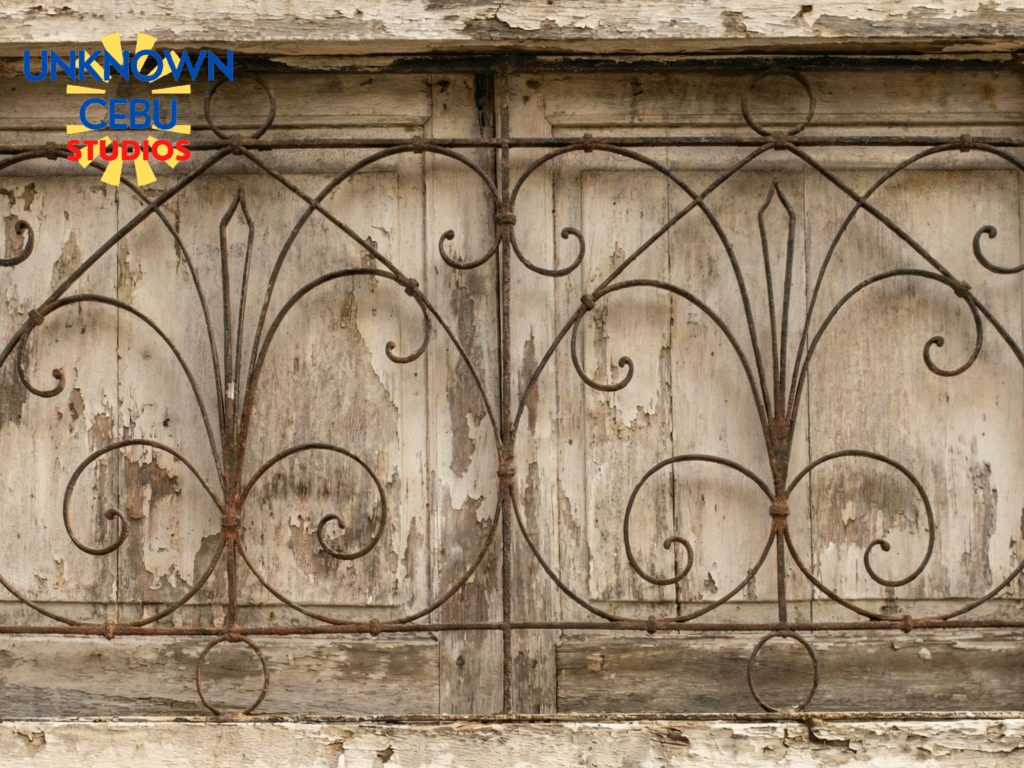
To understand the architecture of the Almagro house is to understand a Philippines in transition; it does not possess the brooding, fortress-like heaviness of the pure Spanish-era Bahay na Bato, nor is it fully an American-style chalet. It captures that fleeting, fascinating moment in the early 20th century known as the “Transitional Style.” The ground floor, unlike the damp stone bodegas of the previous century, was built with coral stone and early concrete; it was integrated into the living and commercial pulse of the family. However, it is the second floor that speaks of true permanence. The structure is held aloft by massive Tugas or Molave posts; these are legendary hardwoods known to petrify and harden with age, becoming impervious to termites and rot. These are the “bones” that have allowed the house to withstand over a hundred years of typhoons, including the recent wrath of Odette. The upper levels feature the distinct ventanillas beneath the solid wood windows, small, grilled openings that allowed the cool trade winds to sweep across the floorboards where families would traditionally rest during the sweltering noons; this was a masterful example of passive cooling long before air conditioning existed; such is the style of a large Dalaguete ancestral house.
The house was the seat of a dynasty that bridged the gap between the friar-dominated Spanish era and the American commonwealth; it was built by Don Crispin Almagro, a hacendero whose wealth flowed from the abaca and copra trade in the fertile hinterlands. This was not merely a regular Dalaguete ancestral house, for it served as a nexus of political and social influence. It was here that the Almagro clan cemented their alliance with the Osorios, the literary and political giants of Dalaguete. The walls of this house have absorbed the conversations of the elite; history tells us that Don Crispin was close enough to President Sergio Osmeña Sr. that the President would visit Dalaguete, riding horseback with the patriarch through the cool highlands. Unlike the isolated hacienda mansions of Negros that stood aloof in the middle of cane fields, the Almagro house was urban and engaged; it was positioned strategically between the river, the highway, and the market, a physical assertion of the family’s dominance over the local economy.
The soul of the house belongs to the woman whose name it now bears, Conrada “Dading” Almagro. Born at the dawn of the American era and living until the age of 99 inside this Dalaguete ancestral house, she was the matriarch who transformed the family’s influence into tangible public service. Breaking the gender barriers of her time, she served as the Municipal Mayor; she brought a maternalistic style of governance to the town. While the men of her lineage built fortunes, Conrada built a legacy of education. It was through the beneficence of the Almagro family that the Dalaguete National High School exists today, sitting on over three hectares of land donated by the family. Every student that graduates from those halls owes a debt of gratitude to the legacy incubated within the white walls of the ancestral house. It is a rare example of noblesse oblige, where the accumulation of land and capital was eventually poured back into the human capital of the town.
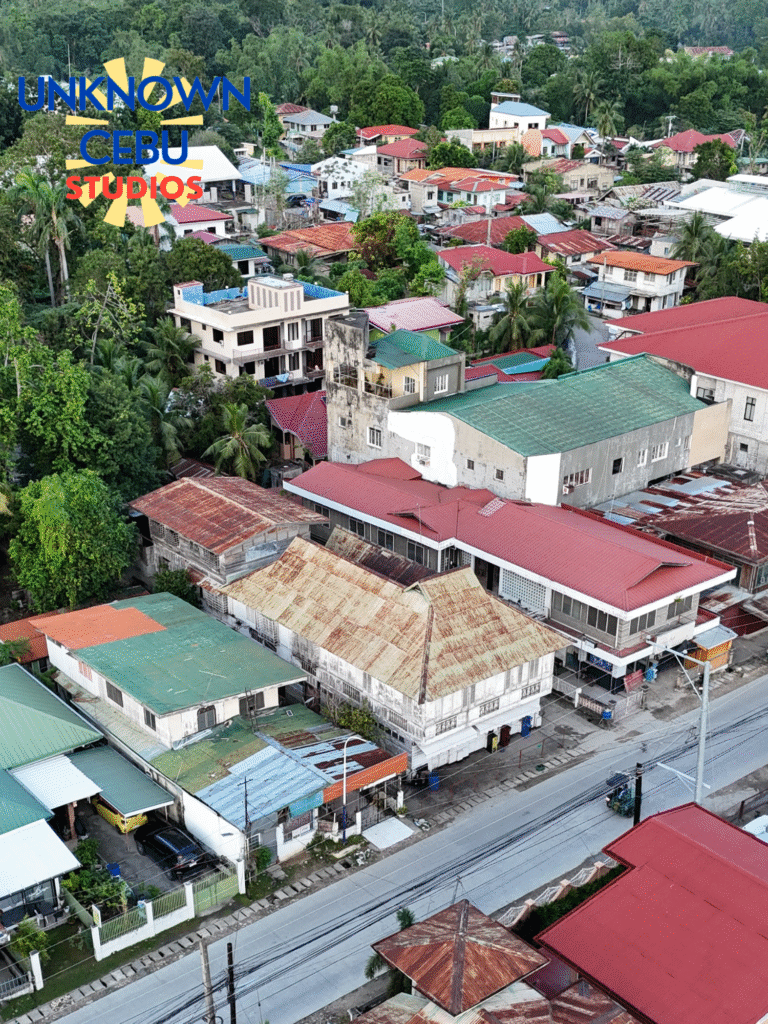


The survival of the Almagro Ancestral House is all the more poignant when contrasted with its neighbors; just across the way lies the Osorio Ancestral House, a structure of similar vintage and pedigree, which has sadly succumbed to the ravages of time, termites, and neglect, standing now as a “fallen beauty.” The Almagro house survives not by accident, but by sheer force of will. While other estates were partitioned or lost to vague tenancy disputes and changing laws, the Almagro matriarch fought a decades-long battle to keep the estate intact. Make of that what you will.

Today, the house remains a private residence, yet its pristine white paint serves as a public declaration of life. In a province where we are losing our heritage structures at an alarming rate, often demolished to make way for generic commercial strips or left to rot by disinterested heirs, the Conrada Almagro Ancestral House stands as a victory. It is a repository of memor`y; it links the high mountain devotion of the Cristo Rey shrine to the coastal commerce of the Poblacion. It is a testament to the durability of Molave and the resilience of the Cebuano family. When you pass by Dalaguete, take a moment to look at the White House. It is not just wood and stone; it is the keeper of the town’s stories, a survivor of storms, and a silent witness to a century of history as a beautiful Dalaguete ancestral house.
Sources:
Ramon Aboitiz Foundation, Inc. Cebu Heritage Frontier: Argao-Dalaguete-Boljoon-Oslob. Cebu City: Ramon Aboitiz Foundation, Inc., 2004.
Municipality of Dalaguete. 300 Years of Grace and Pride: Tricentennial Celebration. Dalaguete, Cebu, 2011.
Belda, John Dave. Personal interview with local historian. December 14, 2025.
Best of Dalaguete. “History of Dalaguete.” Accessed December 15, 2025. https://bestofdalaguete.weebly.com/history.html.
Dalaguete National High School. “Downloads.” Accessed December 15, 2025. https://dnhs6022.weebly.com/downloads1.html.
FamilySearch. “Conrada O. Almagro (1916–2015).” Accessed December 15, 2025. https://ancestors.familysearch.org/en/GH2W-KR7/conrada-o-almagro-1916-2015.
Munky Explores. “🔥[HD #CEBU 🇵🇭] ▶︎ DALAGUETE | #Philippines | FEB2023 Walking Tour.” YouTube video, 27:02. February 14, 2023. https://www.youtube.com/watch?v=xEdxe1LrPV4.
Oaminal, Clarence Paul. “The Osorios, the Writers of Dalaguete, Cebu.” The Freeman (Philstar.com), January 5, 2018. https://www.philstar.com/the-freeman/opinion/2018/01/05/1774872/osorios-writers-dalaguete-cebu.
People vs. Carulasdulasan, G.R. No. L-6408 (Supreme Court of the Philippines May 24, 1954).


