
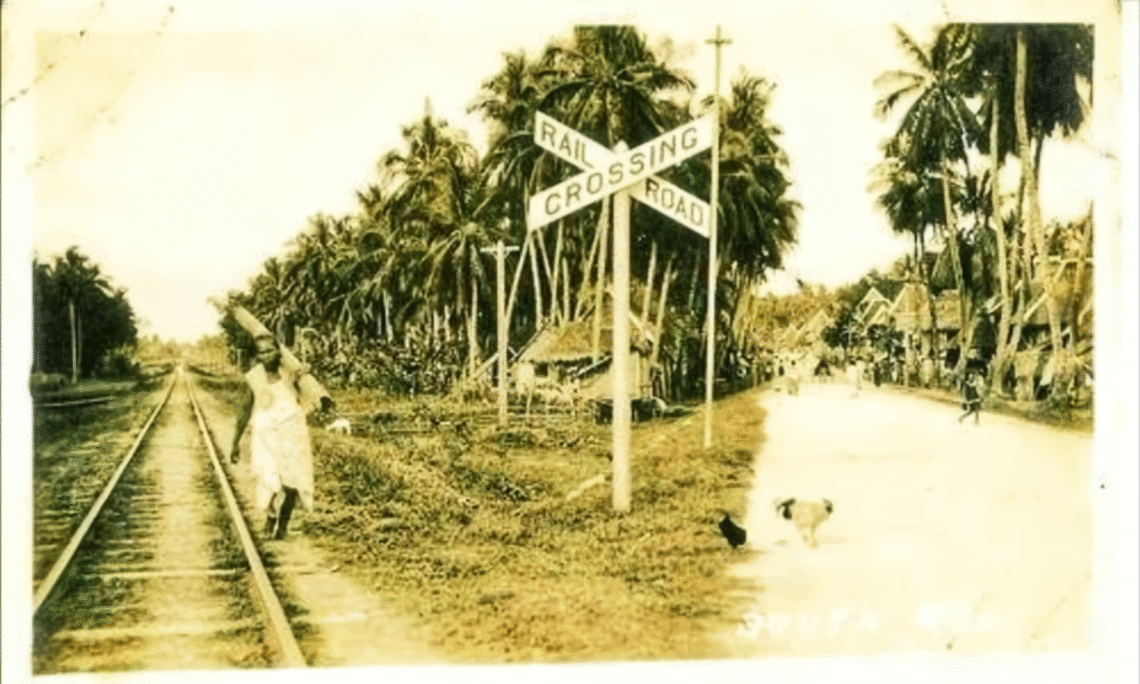
Ang Kabilin sa Riles Sa Sugbo: Sibonga, Railway Remnants or in English “The Heritage of Rails in Cebu.” This intersection in Sibonga, Cebu marks an important point in the island’s transportation history, where an American-period highway crossed paths with the Cebu Railroad. Built in the early 20th century, the road system was part of the Americans’ effort to modernize infrastructure and improve mobility across the province. At the same time, the railroad, which began operation during the late Spanish period and was expanded under the Americans, provided a vital link between Cebu City and the southern towns. Here we see a remnant of Sibonga’s Railway. |U.C.S|

In Sibonga, these two networks met, creating a hub of activity that shaped the movement of goods and people. The highway carried trucks, automobiles, and buses that connected rural communities to urban markets, while the railroad offered a steady, |UnknownCebu| reliable route for passengers and agricultural produce. Together, they symbolized the integration of old and new forms of transport that fueled Cebu’s economic growth in the first half of the 20th century.


Although the railroad tracks have long since disappeared, and the highway has been modernized for present-day traffic, this site remains a tangible reminder of that era of change. By looking at the space today, we catch a glimpse of how infrastructure once influenced the rhythm of daily life and the broader development of Cebu. It is a piece of heritage hiding in plain sight, where history quietly lingers in the landscape. It is also important today that these remnants, no matter how small, should be preserved as they could be the basis of the preservation of further heritage sites. Furthermore, they represent (should they be given the attention they deserve) a place in Cebuano history that cannot be denied. |U.C.S|
#Cebu#PhilippineHistory#railway
|UnknownCebu|


