It was several days before the Japanese invasion of Cebu when the news reached the people of Talisay that the attack on the island was coming sooner rather than later. They gathered at the municipal hall to hear the grim news of the fall of Bataan and the surrender of Major General Edward King to General Masaharu Homma—a devastating defeat that would soon lead to the infamous Bataan Death March. The municipal mayor of Talisay had already begun advising residents to prepare evacuation plans in anticipation of the invasion. Small-scale attacks, including the shelling of Toledo on the island’s west coast and the bombing of vital facilities in Cebu, signaled that the threat was imminent. These early acts of aggression heightened fears across the province. Those most educated in the community were particularly alarmed, fully aware of the atrocities the Japanese had committed in Korea and Manchuria, and they were determined not to share the same fate.
This event marked one of the earliest and most significant moments in World War 2 Cebu, a time when local communities braced for occupation and uncertainty. The memories of those days remain a powerful chapter in World War 2 Cebu history, reflecting both the fear and resilience of the Cebuanos who lived through it.

Maria Dolores “Taying” L. Plaza was only ten years old when she saw the people of the Poblacion in Talisay, Cebu, packing their belongings and leaving their homes to wherever they could. Her father, Aquilino, was closely tracking the progress of the war in Luzon, hoping that Bataan would hold on just a bit longer for reinforcements to come and relieve the siege; they never did come. Her mother, Catalina, had already packed everything they could into suitcases, Buri bags, and a large trunk which was filled to the brim with some of the family valuables including jewelry, photo albums along with legal documents in the form of deeds for their properties. The young Dolores was put to work helping pack other essentials such as a Singer Sewing Machine and the beloved image of the Santo Niño de Cebú that had been with them for nearly a century by that point. She fondly remembers slowly removing the vestments of the antique wooden image then removing the globe and scepter that symbolized the Christ child, noting that the image seemed to speak to her while she was busy packing its vestments inside pieces of cloth. Her three other siblings were also busy at work doing the same thing.
This story remains one of the most vivid memories from World War 2 Cebu, capturing the fear and faith that filled the hearts of families as they faced the uncertainty of war. It reflects how ordinary lives were suddenly changed by the news of invasion, forcing even the youngest to take part in their family’s survival. The devotion to the Santo Niño and the care with which it was packed symbolize the strength and spirituality that defined the people of Cebu during those dark days of World War 2 Cebu.
Through the recollections of Maria Dolores “Taying” L. Plaza, we gain a personal glimpse into the human side of World War 2 Cebu—a story not of battles and armies, but of families, faith, and endurance amid the chaos of history.


Buhi kaayo siya tanawon. Sa sige nakog impake sa iyang mga gamit, mga biste ug sceptor nga mura ga pirat-pirat iyang mata. Murag gatabi siya nako pero dili ko kadungog.
-Maria Dolores L. Plaza, 91 Y.o
Translation: He looked so alive to me. As I continued to pack his things, his vestments and sceptor, it appeared to me that his eyes were blinking. It felt like he was talking to me, but I just could could not hear
She wrapped the image inside paper and pieces of cloth as if the Holy child was back to when he was swaddled in the manger, then put it inside the family ‘Kaban’, a large trunk meant for storage. Others in the Poblacion had also heard the news, but were slow to react thinking that the Japanese could not be as brutal as they had been told by newspapers such as the Tribune together with radio reports from Luzon. Neighbors were anxious about the incoming invasion, not to mention that some had left long before with only the clothes on their backs. As the preparations for the departure were being finalized, a knock on the wooden door came. Upon answering they found out it was a close relative of the family inviting them to evacuate together to their estate high above on the hills of Cabatbatan-Liburon where the family owned vast tracts of land, a farm, and a small house. Dolores’ family delightfully accepted knowing that their close relatives owned a large truck onto which they could bring many more personal possessions.
Pagkabuntag sayo manlakaw mi ug gamay nga sapa, magligo. Lipay sab mi nga walay klase. Daghan man mi igsuon so halos tanan mag dungan. Kaon, ligo, mata ug katulog. Duol raman ang simbahan so kada adlaw muhapit mi mangaji.
Translation: In the morning we would walk along the riverside, take a bath. We were happy because there was no class. We were a big family with many cousins and everyone was within a short walk. Eat, bath, wake up and sleep. The church was close so we would walk there everyday to pray
-Maria Dolores L. Plaza, 91 Y.o
In the late afternoon, the two families loaded onto the large truck and set off to southern Cebu. The roads were full of people moving south with some families carrying their belongings on their shoulders, others in carts, while others, like her family were in automobiles. She still remembers the grim look on peoples faces while they watched their truck pass by, wishing that they too could afford a vehicle. The empty rail tracks that could occasionally be seen beside the road reminded her of the trains that she would hear nearly everyday as they passed by Barangay San Isidro in Talisay. Soon they arrived at the farm house in Cabatbatan, San Fernando, Cebu early in the evening of April 8th. The adults unloaded and organized the large ‘Kabans’ of both families into the house while the children amused themselves with the surroundings. Her wandering mind kept her attention for some time; she had very little idea of what a war would entail. Her parents chose not to inform her about the vast majority of what they had heard which led to her forming a warped sense of what war was like, but in time the young Dolores would learn the truth about war over the coming years.

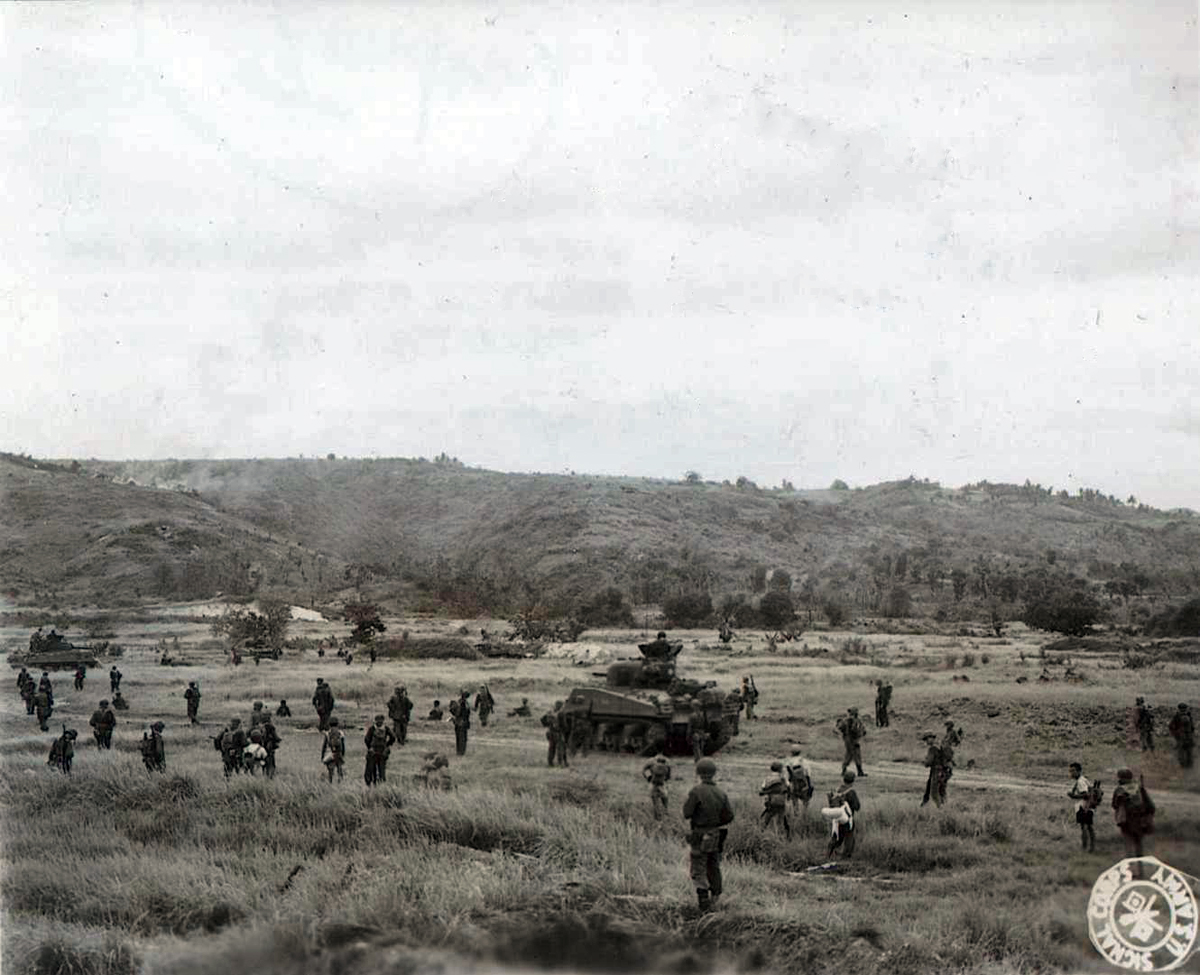
The Japanese invasion on April 10th, 1942, was not as memorable as one may first think. The city burned in the distance, not because of bombardment from Japanese ships, but mainly because of the demolition of vital infrastructure to prevent them from falling into enemy hands. The two families, high above the hills overlooking the sea could see smoke rising from the city and troop transports approaching the beach of their homes in Talisay, but that was all too far away; they were safe at that point in time. All she could think about was playing around the rolling hills along with her family; to her it felt like a dream to be away from school and have the relative freedom to play to her hearts content. The adults did not seem to concerned after all, so why should she? Other families, both related and unrelated by blood came to settle in the area; they too were ‘mga Bakwit’ from all around Cebu. One family in the area apparently traveled as far as Compostela in the north to evacuate; it was told to them that it was because the patriarch of the family was an officer in the army.
Life continued as is until late 1942 when the Japanese fully grasped its talons onto daily life in Cebu. Dolores, her family, and all the families who had evacuated were told by Japanese soldiers personally that they could, indeed, go home without any risk of being punished as they had “mistrustingly” been informed by the “propagandist” media of the United States. The family, tired of living in the relative discomfort of what was and still is a rural settlement far from the big city, eagerly agreed and went back to Talisay, discovering that their homes were in fact still intact. The Japanese soldiers who came to them were kind to the adults as well as the children, handing them candy and other sweets to win them over. One of the soldiers, one who was of high rank, loved to talk to the children about life in Japan and gave them small trinkets and souvenirs. It seemed that barely anything would change.
This period in World War 2 Cebu reflects the deceptive calm that many Cebuanos experienced under early Japanese occupation. Families like that of Dolores believed, for a brief time, that life might return to normal. The Japanese presence in towns such as Talisay was marked by gestures of goodwill that masked the deeper tensions of the war. Despite the uncertainty, people tried to rebuild their routines, trusting that the worst had passed. It was a fragile peace—one that would soon be tested as World War 2 Cebu grew harsher and more unforgiving.
For many who lived through these events, memories of this fleeting peace became intertwined with the larger story of World War 2 Cebu. It was a time when smiles from soldiers and gifts of sweets could not hide the reality of occupation, when hope and fear existed side by side. The story of Dolores and her family captures that delicate balance—an early chapter in a long and difficult struggle for survival and freedom.
The following are some select accounts of how life was in Maria Dolores’ town of Talisay during World War 2. These accounts have been translated into English.
THE JAPANESE ACROSS THE STREET: Across our Street, The Garrison
TRANSLATED VERSION INTO ENGLISH: This is not a direct translation, but a translation that is as close to the original meaning as possible taking into account existing context of the time.
“It seemed that after a month or so everything was at peace. We slowly went home to Talisay because we were told to by the Japanese. At that time, Monsignor Camomot was the Parish Priest of Talisay. The Japanese were very kind to us. Across our house, along the entirety of the beach were Japanese who had set up camp. We were in shock to see the whole beach occupied by Japanese having a rest under the coconut trees. At that time nobody lived by the ocean, not like today, but there was one big house that was built by the Spaniards that we called “Old Spanish House” and the Japanese who lived there were of higher rank. We were even taught Japanese dances by the soldiers, I remember a song that went like this “Dore o, dore na, araw, saito tokyo, yeye!” another song was Miyoto Okai. (“Aikoku Kōshinkyoku”)

“The places which were made garrisons by the Japanese were the front of our house, the central schol building, the municipal hall and the big house in Cansojong. There was a huge water pump in front of the Municipal hall and that’s where the Japanese would get water to do their laundry with.”
“If the Japanese had a meal time they would bring trays. Even as they ate, we were also given food by them. The officials of the Japanese were very kind unlike the rank and file soldiers. The “boys”, usually younger soldiers under the thumb of the officials, would be told to give us food as well because we were right across. We were so loved by the Japanese that some envy developed towards us by the neighbors. The Japanese would also give food to those who would bring plates’ it was funny because the soup, it was very salty! I could not drink it, it was so salty! The name of the food was, Hango”
“When the Japanese would bathe we would always be in awe. They would be in G-string’s and go inside large barrels with something heating the underside, we could tell because of the smoke. Sometimes we would see a soldier carrying both a sword and rifle, we were mesmerized whenever they offered to let us touch or see them up close. Some officials were so short that their swords would strike the ground sometimes. One of the Japanese soldiers was always funny to us due to the fact that he would run around like a cat, small, but very fast.”
Rest and Recreation: Yasumi!
TRANSLATED VERSION INTO ENGLISH
“Every Sunday they, the Japanese, would have a rest day, They called it “Yasumi”. They sang around and would enjoy the day because there wasn’t much else to do back then. In their garrison, they sang very loudly. In the morning of ‘Yasumi’ they would line up and face the sun, they sang something, but I forgot the lyrics and tone of the music. The whole day was spent having fun and not just that, they loved to swim in the ocean. They were very loud and played games inside the garrison; this would last the entirety of Sunday. They could not really venture out into other areas because the guerrillas would certainly kill them. There was one case when a Japanese patrol was ambushed in the area of Lagtang by guerrillas. ‘Yasumi’ had to stop for a while, but it eventually came back.”
“We used to sell Bananas to the Japanese because that’s what they wanted. Depending on what they could get that day, they ate bananas, pineapples, mangoes and brown sugar a lot. The common soldiers always loved those fruits. They had a system of trade called “kokang” meaning exchange. If they did not have money to exchange they would instead of another good or food to exchange, a bit of negotiation was needed. “Watashi wa Taberu Banana” (I eat Banana). I’m still good a Japanese right?”
Meeting some of the Men: Making Friends!
TRANSLATED VERSION INTO ENGLISH: Officials in this sense may mean someone of a high rank
“Most of the Japanese that were pure blood Japanese were very kind, even more so the officials because they were rich. The hard headed soldiers would gamble, drink because they were of lower rank. The ordinary soldiers would be an annoyance to the people, but these were Koreans and not pure Japanese. I made a few friends because of their kindness towards me namely, Mr. Shiu, Nakano, Satake, Kawai, Yuseno, Yamaguchi, Yamamoto, Sarai, Togo and many more! Mr Shiu and Nakano were well respected in Talisay, they had huge voices; they were the officials we would visit when they danced in the camp.”
“”Mr Shiu was a teacher in English and Nakano was an immigrant to the country. We didn’t know that they had high ranks at the time, we were ignorant back then. We were always given chocolate if we were able to memorize a song or two. Even though Mr. Shiu and Nakano had different personalities, they were close friends; though that may be why they were close friends . When eating, Mr. Shiu was very silent and would give respect to everyone, but that Nakano… I wonder if he was a bit crazy because he would always be singing and dancing in the garrison, but I wouldn’t complain since he had a nice voice anyways, but when put together as a team, they were excellent at planning attacks. Nakano was the one whose sword would drag on the ground. Nakano is the funniest Japanese I have seen and met in my life; he would make funny faces to us and play balls with us.”

“Yamamoto was their highest official. A man of big stature. He was always the last to bathe because he had a big special barrel all to himself. He never talked and always prayed at the altar of the big house of the Spaniards. He was the most Japanese looking of them all with his slanted eyes making him always look like his eyes were closed. His hobby was fishing by the sea as he always had a set of fishing materials and he would sometimes bathe in the water all by himself. A silent man with no worries in life. Almost every day, I remember him clearly bringing his pistol and sword to Cansojong because he loved the ocean in that area. We would always bow to him whenever we passed by him or vice versa. I remember there being one instance when a thief was caught trying to steal from the garrison; he was hanged by Yamamoto.”
“”Yuseno and Satake were young officials, very handsome ones at that!, even the girls would be infatuated with them. I guess they became new officials because they hadn’t gotten any medals yet. It was Yuseno who loved us, the local children, the most as he would be our “Kokang” partner in trade. He wanted bananas for chocolates and if very much liked the bananas we brought to him, he would also give us some extra candy . Those two would love to walk around Talisay getting girls all the way. Satake had a tinge of being American, maybe that’s why he was so handsome.”
“Yuseno and Satake were able to get wives who were from Bulacao and had children with them.”
“Sarai and Kawai were the cooks of the whole neighborhood. They lived right outside of the Old Spanish house because the highest officials living inside loved smelling the cooking soup in the morning. They would always set aside some for us who lived across them. During ‘Yasumi’ those two could always be seen walking around with pots and pans; this was because they would go to the city in the morning to sell soup then return in the evening. They were hardworking, we admired them”
“Slowly one by one they left except for Sarai because he was the favorite cook for the garrison.”
The Fate of These Men: A postscript
The information behind what happened to these men is non-existent or at least very hard to find and translate with the information stemming only from personal accounts. These are the compiled information on whatever happened to them; please note that these are hearsay not backed up by anything other than Nang Taying’s memory and the memory of others in the town.
Mr Shiu was not in fact a Japanese man, but a Chinese man educated abroad. Nakano moved out of the Talisay garrison in the middle of the war (Maybe around late 1943) and was transferred to Naga where he lived in a house built by the Mejia family together with Mr. Shiu. It is unknown where both ended up at the end of the war. Yamamoto was transferred from the Talisay garrison right after the invasion; his fate is unknown. Yuseno and Satake were only low ranking soldiers according to two other elderly people in Talisay, one mentioned that Yuseno was killed in a guerrilla ambush. Yuseno was accused of rape. Satake’s fate is unknown to us. Sarai was the only Japanese soldier who spent the entire war or at least the vast majority of it in Talisay; none of those who I spoke with are able to recall his fate. Kawai (Otherwise known as Tabibito meaning Traveler) moved to another garrison on another island, possibly in Negros.
“