The day was March 26th, 1945, “E-Day” on the island of Cebu in the central Philippines. It was a hot day with all the tropical heat baking on the black sands of Talisay point some ten kilometers due south of the large and prominent city of Cebu. The people in and around Talisay could still recall how over the past six months; American bombers and fighters would fly over to bomb positions of the Japanese in the city, sometimes the bombs hit so close that they could see the earth leap up as whistling bombs softened up the area. The town was site of a small Japanese garrison located across the Parish church; it had been evacuated days before March 26th. They were preparing for what was to come. What will come to be known as the Takas sa Talisay.

Most of the civilians left upon the dropping of flyers and personal warnings from some kind Japanese soldiers to leave for “American heitai are coming!” leaving only the infirm who elected to stay upon realizing their fate. Many left with only the clothes on their backs as they had three years before when the people who were warning them to leave had also landed. Guerrilla fighters in the area also prepared themselves. Those who remained on the beaches of modern day Barangay Cansojong, Poblacion and Tangke would wake up early in the morning to see a small fleet off the coast, ships and landing craft assembled; this would be the beginning of the end of Japanese occupation in Cebu and the beginning of the long awaited Liberation.

The American naval ships consisting of three cruisers and nine destroyers were assigned to operate under the operation called “Victor II”. Formally, it was the “US and Filipino reconquest of Cebu island, Bohol island and the Negros Oriental south-eastern part of Negros island in the Visayan islands group” which would push out any Japanese forces and reclaim the islands. The ships steamed out of the battle zone of Leyte that had been decisively won by Americans along with Filipino guerrillas with only mop-up operations still continuing. They entered the Cebu Strait and assembled off the coast of the seaside town of Talisay; the town being a strategic jumping-off point for any invasion to begin as was demonstrated on April 10, 1942 when the Japanese landed at the same location during their invasion. The larger destroyers and cruisers were accompanied by a number of landing craft that would storm the beaches. The ships and men of the Americal Division were under the command of General William H. Arnold who had played a large part in defeating the enemy at Guadalcanal, Bougainville then advancing to Leyte where he had also won another victory. His orders were clear, liberate Cebu.
The Talisay Landing marked the beginning of the liberation of Cebu and stood as a mirror to the earlier Japanese landings, now reversed by the same tides of war. For the people who had endured years under occupation, the sight of American ships off their shores signaled the return of freedom. It was not merely a military maneuver, but a symbolic homecoming — the long-awaited end of fear and suppression in the southern Visayas.
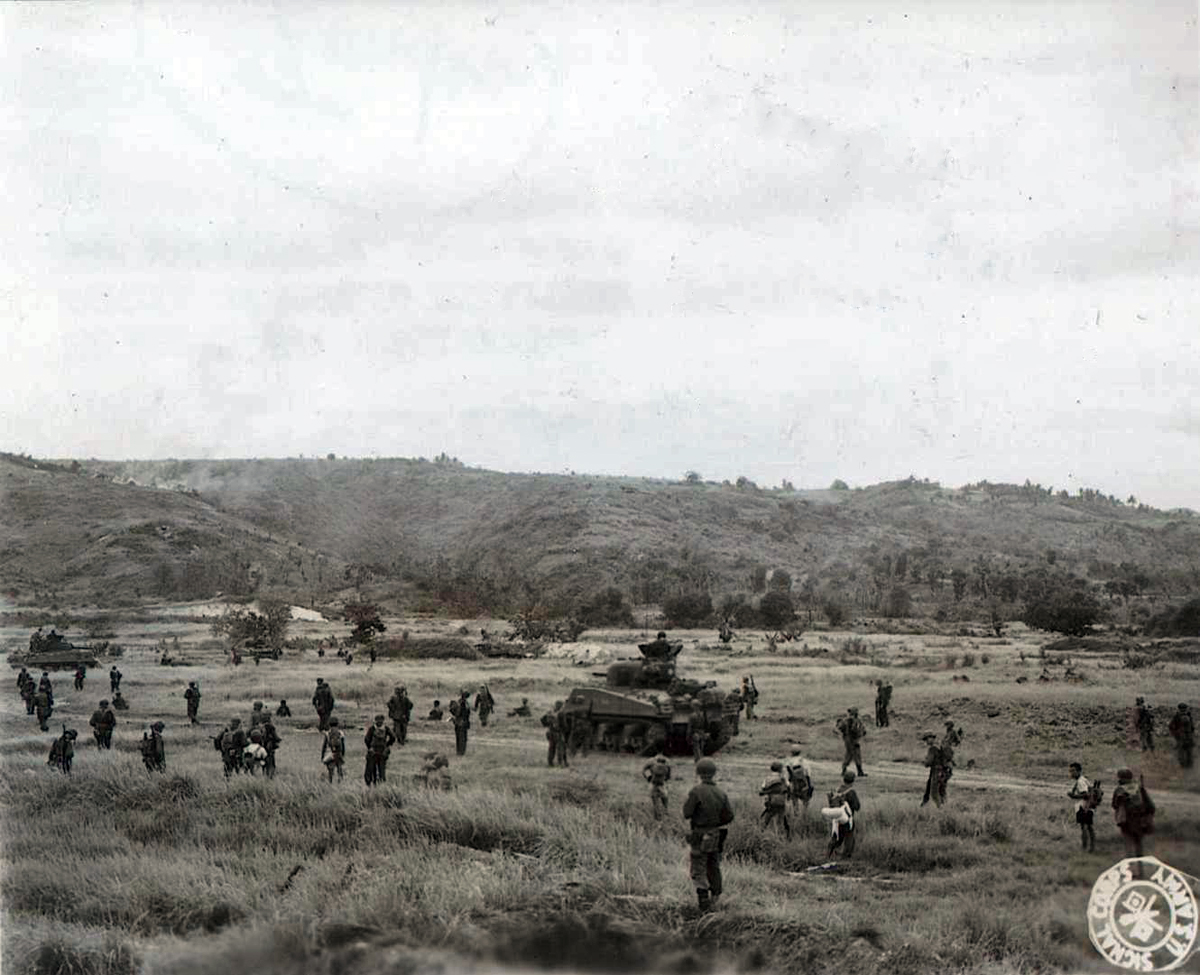
Today, the Talisay Landing remains one of the most remembered moments in Cebu’s wartime history, a testament to the courage of both Filipino guerrillas and American soldiers who fought to reclaim the island. It continues to serve as a reminder of sacrifice, unity, and the enduring strength of the Cebuanos during World War II.The landings were stalled for two hours as engineers cleared mines to carve a way through the thick minefield. Other than the mines were elaborate booby traps that hindered the progress somewhat. Medics and support personnel tended to the wounded, and sadly, around eight had died from the mines. The Japanese chose not to defend the beach, as commanding officer at the time, Takeo Manjome, used a common strategy of allowing American troops to land to buy time for other units to defend the routes to Cebu City in a layered defense scheme. The troops advanced, carrying with them equipment and M4A1 Sherman tanks.
The Talisay landings were a critical turning point in the battle for Cebu, demonstrating both the precision and determination of the Allied forces. Despite the mines, traps, and the hidden dangers that awaited them, the soldiers pressed on, establishing a beachhead that would soon become the gateway to Cebu City. For those who witnessed the Talisay landings, it was a moment of both triumph and loss, marking the beginning of the end of Japanese occupation in the province. Talisay Landing.
In the memory of the people of Cebu, the Talisay landings stand as a defining event of courage, sacrifice, and liberation. The bravery of the engineers who cleared the mines and the soldiers who advanced under threat ensured the success of the campaign. The Talisay landings remain a powerful reminder of how freedom was regained through perseverance and unity during one of the most decisive moments of World War II in the Visayas, a legacy of the Talisay Landing.
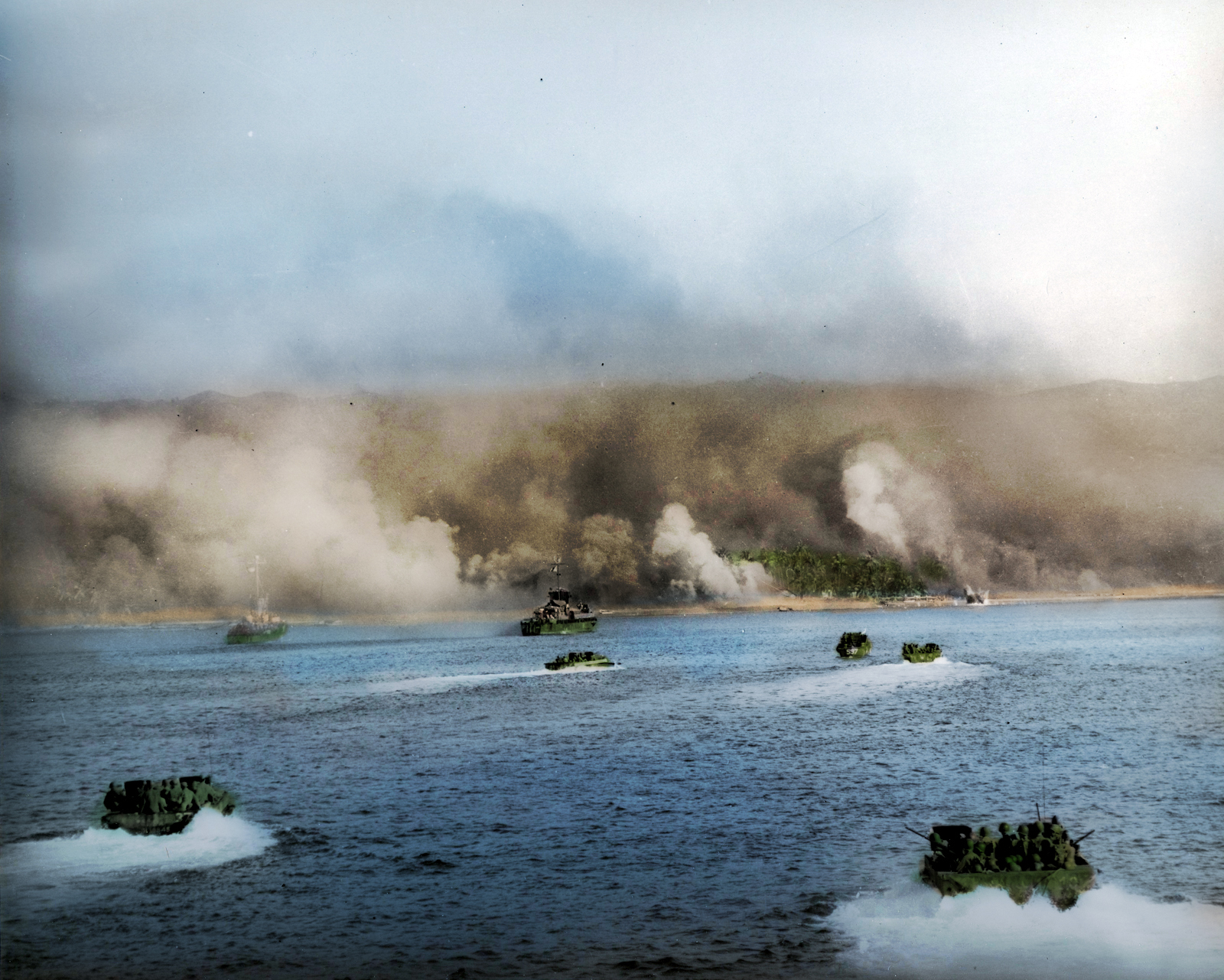
A heavy bombardment began at 7:30 a.m as ships of the task force shelled the coast of trees and inland to the Poblacion where they believed some stragglers from the garrison which once occupied the town could be hiding. This bombardment lasted for about an hour; damaging or destroying many structures including the century old church of Sta. Teresa de Avila, but at long last at 8:30 a.m, the first wave of landing craft called LCVP or “Higgins Boats”. Another landing craft used were the so called Amtracs or LVT’s.. The weather was near perfect for this sort of operation with archival footage from that time showing barely cloudy skies.


They approached the shoreline with little to no resistance as was supposed to be expected from a Talisay landing. This was a surprise for the members of the 182nd Americal division who were battle hardened veterans who had come off from the campaigns of Leyte and Guadalcanal. Unlike many other beach landings such as those in Normandy; there were no incessant machine guns rattling away at them nor artillery shells flying their way, instead replaced with tranquility. Soon after launching, they hit the beach of Talisay along the beachline of Poblacion to Tangke. It was a smooth landing for the Americal division until an explosion rocked one of the LVT’s, A mine!


The entirety of the beach was heavily mined with bombs dug underground that when stepped on would cause an explosion. An LVT ran over one and was promptly thrown into the air with all hands on board. The crew and surrounding soldiers to this first landing vehicle would be the first to die in the liberation. They had not really anticipated the amount of mining the beach had gone through in preparation for the landings which resulted in the first casualties of the liberation. As the waves of American soldiers and machinery came to land; they were promptly greeted by explosion after explosion of mines. With the fear of a mine exploding right under them; some soldiers elected to wait for others to arrive and dig them up leading to a pile up on the beach or “logjam” as the soldiers called it. This “logjam” coerced the men of the 182nd and 132nd along with the 132nd regiment who had not yet disembarked to leap off their LVT’s early into deep water struggling to make it ashore amid the deep waters. Mines destroyed ten out of the first fifteen LVT’s on the beaches of Talisay.

Ga tan-aw kami sa ibabaw sa usa ka bungtod didto likod sa among gipuy-an sa Balud, San Fernando. Nangatkat mi kay among papa ug mama nag pukaw namo unya ipatanaw mi. Ang aso ug bomba makita ug klaro bisan layo.”
Nang Loling, Age 91, 2023
We watched from the top of one of the hills behind our home in Balud, San Fernando. We scaled the hill because our father and mother woke us up to see the landings. The smoke and bombs could be seen even from a great distance.
The Landings were stalled for two hours as engineers cleared mines to carve a way through the thick mine field. Other than the mines were elaborate booby traps that hindered the progress somewhat. Medics and support personnel tended to the wounded, sadly, around eight had died from the mines. The Japanese chose not to defend the beach as commanding officer at the time, Takeo Manjome, used a common strategy at the time of allowing Ameican troops to land to buy time for other units to defend the routes to Cebu City in a layered defense scheme. The troops advanced carrying with them equipment and M4A1 Sherman tanks.

Despite suffering some casualties, Americal division troops pushed forward from the Talisay landing towards the inland encountering the traps then clearing them. They pushed inland towards Tabunok then onwards to Outside Pardo was resistance in the form of hidden snipers taken pot shots at the advancing column only to be met with flamethrowers to flush them out. With little to no resistance from the Japanese, Filipinos began lining the streets to welcome them shouting “Hey Joe!” or “Chocolate Joe!”, a common occurrence that still happens today was to refer to any white man who even vaguely resembled an American as “Joe”. The Filipino children were given chocolate by the troops as crowds formed to cheer them on. By March 27th, the next day, the 182nd had moved towards the city and encountered heavy resistance from outposts on the perimeter of the city.
Nowhere in the Philippines had such beach defenses been encountered… Roads leading inland and into Cebu City were heavily mined, and mines were found scattered throughout the hills to which the Japanese had retreated”
-MJ Netzorg
The Cebu guerrillas organized under the Cebu Area Command with Lieutenant Colonel James M. Cushing as commanding officer were present at the landings and the subsequent push to the interior. One guerrilla describes how his accompanying Americans of the 182nd were surprised at how they were no longer fighting in Jungles, but in a “Concrete Jungle” instead. The guerrilla forces were prepositioned in and around the city providing extra help; most being around the Buhisan area. Some displaced Cebuanos who were in Leyte, Bohol, or Negros came with American troops as interpreters or guides.

From the outskirts of the city the 182nd moved forward to the center of the city with barely any resistance to greet them aside from the occasional light arms fire. Still, many buildings were booby trapped and streets mined to further impede the advance, but nonetheless they carried on. Some makeshift pillboxes were built into the corners of buildings with the intention to maul down American troops once they crossed the intersection, however they were already abandoned. Some buildings were burned by the Japanese in their retreat including sections of Colon Street and Saint Theresa’s College. The Cebu Capitol Building where the government was situated was still, for the most part, intact, though portions were burned and looted. Deep in one room of the Capitol was over a million pesos in wartime “kenkoy money” or Mickey mouse money as many liked to call the Japanese issued currency at the time. By March 28th, the city was secured with additional troops coming to reinforce the 182nd.
This was only the initial stage of the Liberation of Cebu. Through these landings, there would finally be a sizable American force numbering around a total of 5,000 men. Soon they would push forward onto the hills of Antuanga/Antuwanga and further into the worst battles of the Liberation on Go Chan Hill and the infamous Babag Ridge.
Today, the landings at Talisay are remembered through an annual reenactment at a monument in the Poblacion erected some time in 2008. The event is also called the “Takas Sa Talisay” or “Pagdaong Sa Talisay.” In previous years the event was always honored by the presence of multiple veterans who were eye witnesses to the landings. In recent years those veterans have passed away and links to the what was are lost to time.

Sources: Segura, M. F. (2018). Tabunan: The Untold Exploits of the Famed Cebu Guerillas in World War II.
Sources: Mojares, R. B. (2015). The war in Cebu.
Sources: Netzorg, M. J., & Mojares, R. B. (1981). CEBU IN WORLD WAR II AND TO INDEPENDENCE (DECEMBER 8, 1941 – JULY 4, 1946): A BIBLIOGRAPHY. Philippine Quarterly of Culture and Society, 9(3), 225–255. http://www.jstor.org/stable/29791731
Sources: https://www.182ndinfantry.org/
Sources: Personal Interviews