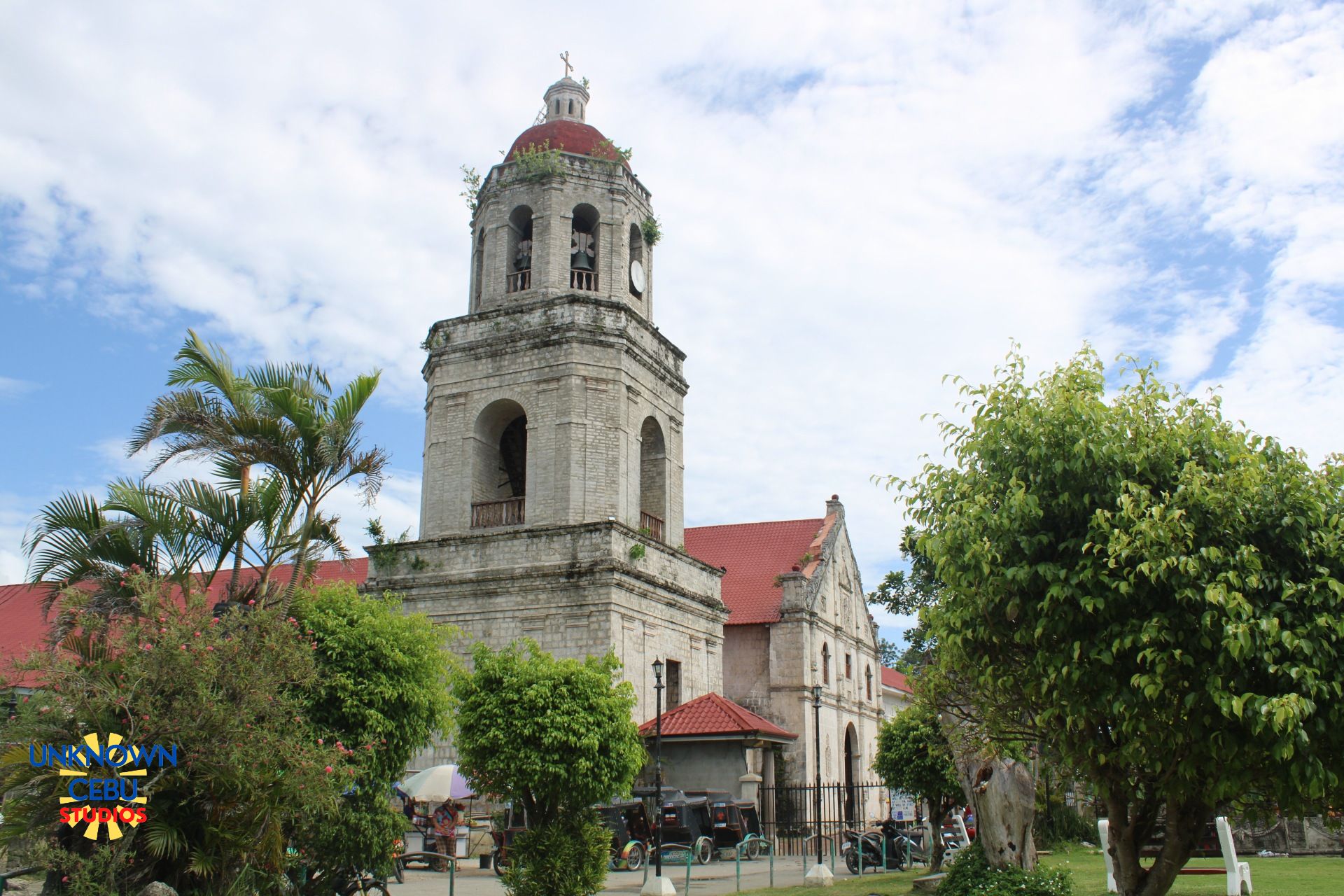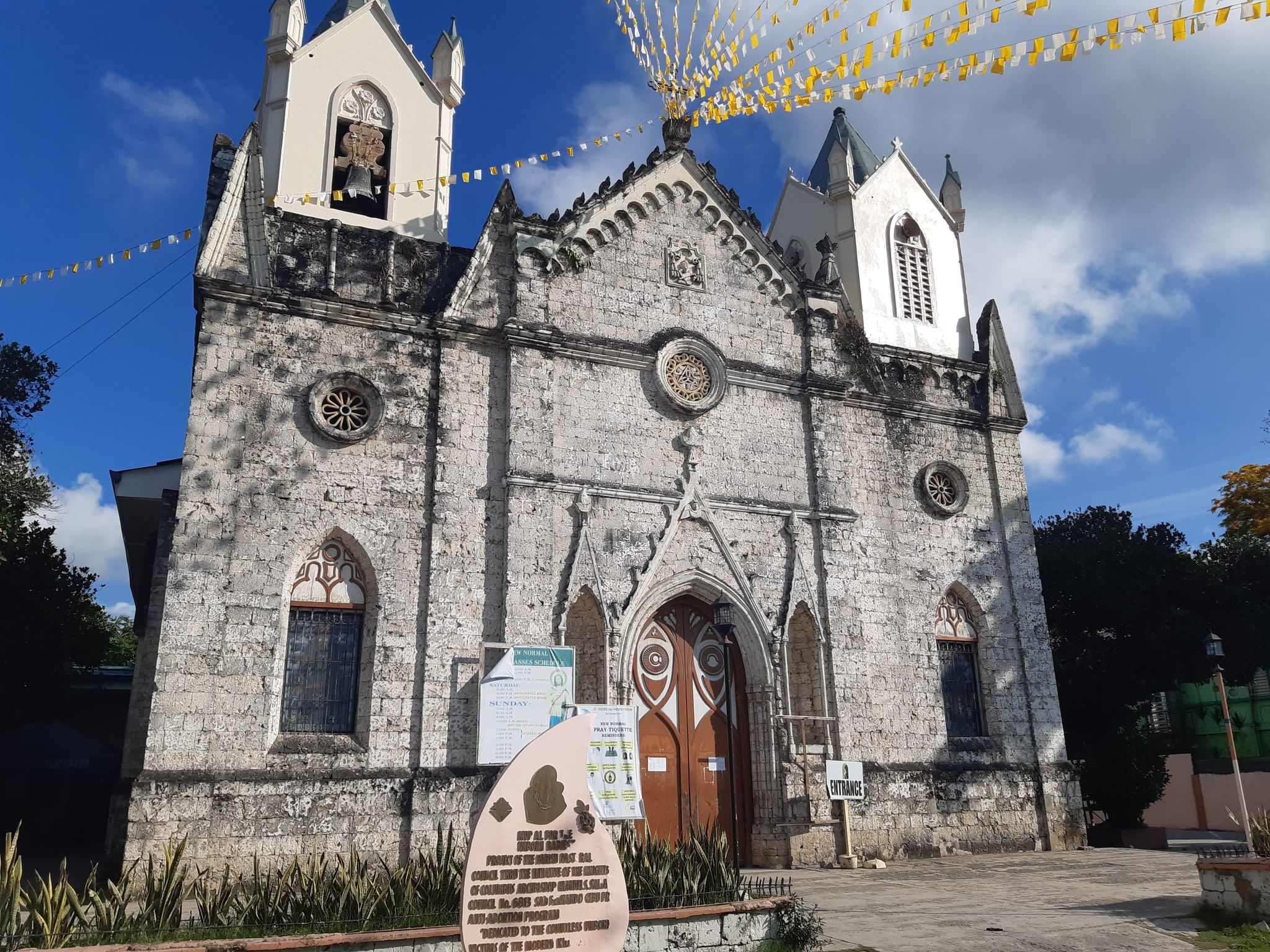
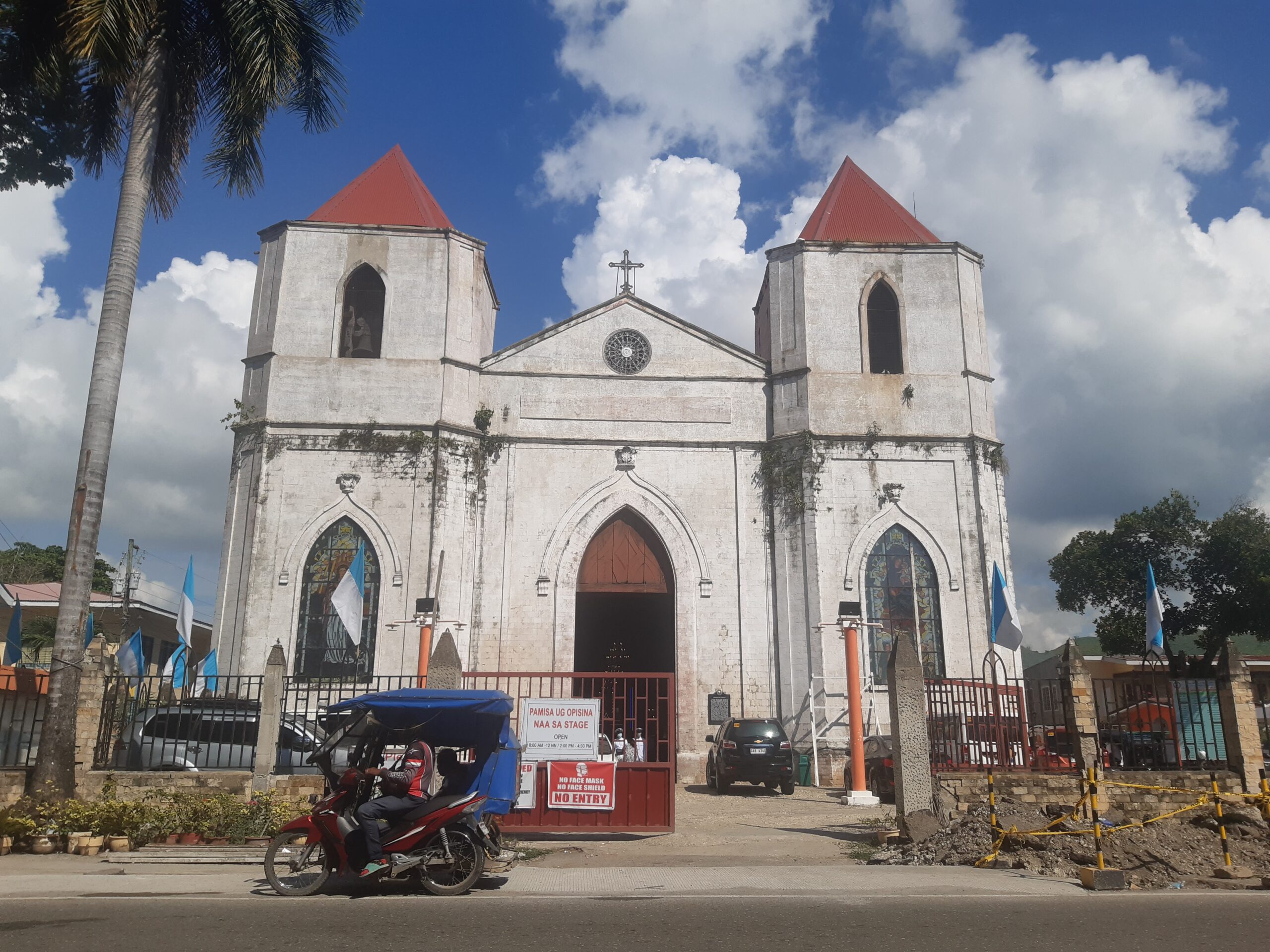
In the sleepy Poblacion of the municipality of Sibonga, Cebu. Where ancestral houses are abundant and where century old acacia trees are shading the people in the park. The church of St Philomena and the lady our lady of the pillar stands. The church was built in the 1880s similar to many other Spanish era churches in cebu. The church and convent was built by Fr. Prospero Puerto (parish priest from 1833 to 1868) following the plans of Bishop Santos Gomez Marañon. The oldest bell, dedicated to Santa Filomena, was installed in 1863. The bell tower was destroyed during the typhoon of November 25, 1877.

A short explanation of the name Sibonga. When spanish colonisers passed by the area, they asked a person living there, but speaking spanish the people did not understand but said “Bonga” after a betel nut tree which grew in the area.
After passing Carcar and passing Barangay Ocana you will arrive at the Poblacion of Sibonga. Its poblacion park surrounded by both ancestral houses and giant century old Acacia trees. Looming infront of the Plaza is the Heritage church of Sibonga. The facade is simple with two massive bell towers and the main portal in between. Similar to the churches of Carcar,Talisay,Bogo and many others in Cebu. Its design is inspired by a combination of baroque and gothic. Some elements like the pointed arch and the small rosette are indicative of the gothic style of architecture. Its walls look thicker than most churches most likely to stave off damage from earthquakes.


Both the gospel and epistle side of the church are identical with high and thick coral stone walls with pointed arch windows. The beauty of the church is not shown through intricate carvings on the outside, the facade and sides of the church are in my opinion quite barren. I believe when building this church the architects wanted to emphasize the inside more than the outside.
But what the church lacks in the outside it makes up for, in the inside. When first entering the church the first thing you would notice is the massive and awe inspiring Ceiling paintings painted by renowned pre war artist Raymundo Francia in 1924. The ceiling paintings depict biblical events including the 7 days of creation. The choirloft is simple and smaller than most other churches. Interestingly the aisles are divided inter three by many slender columns forming pointed arches. These are uncommon in Philippine churches because of their vulnerability to earthquakes. The retablo is small and simple which makes me wonder if this was the original Retablo, and if it is not what happened to the original.


The church has been recognized as a heritage church by the National Historical Commission of the Philippine (NHCP) by placing a marker detailing the history and reason for why the church is part of our heritage.

Special thanks to Landel for help in many regards.