The sugar industry of Talisay is one of the most important Economics drivers for the Community in the past and even today. The title of Sugar Central was given to Barangay Mohon in Talisay in 1922 to recognize the massive sugar mill that existed there. The Spanish Sugar mill “Maquina De Vapor” was one of the largest in Cebu bringing in Sugar cane from as far south as Carcar. The Marpepe mills has been one of the main drivers of the Sugar economy of the Talisay, Cebu, sugar history for over 100 years. (I would like to note that the term “Marpepe” is derived from the sons of Valeriana Kong, Mar and Pepe)

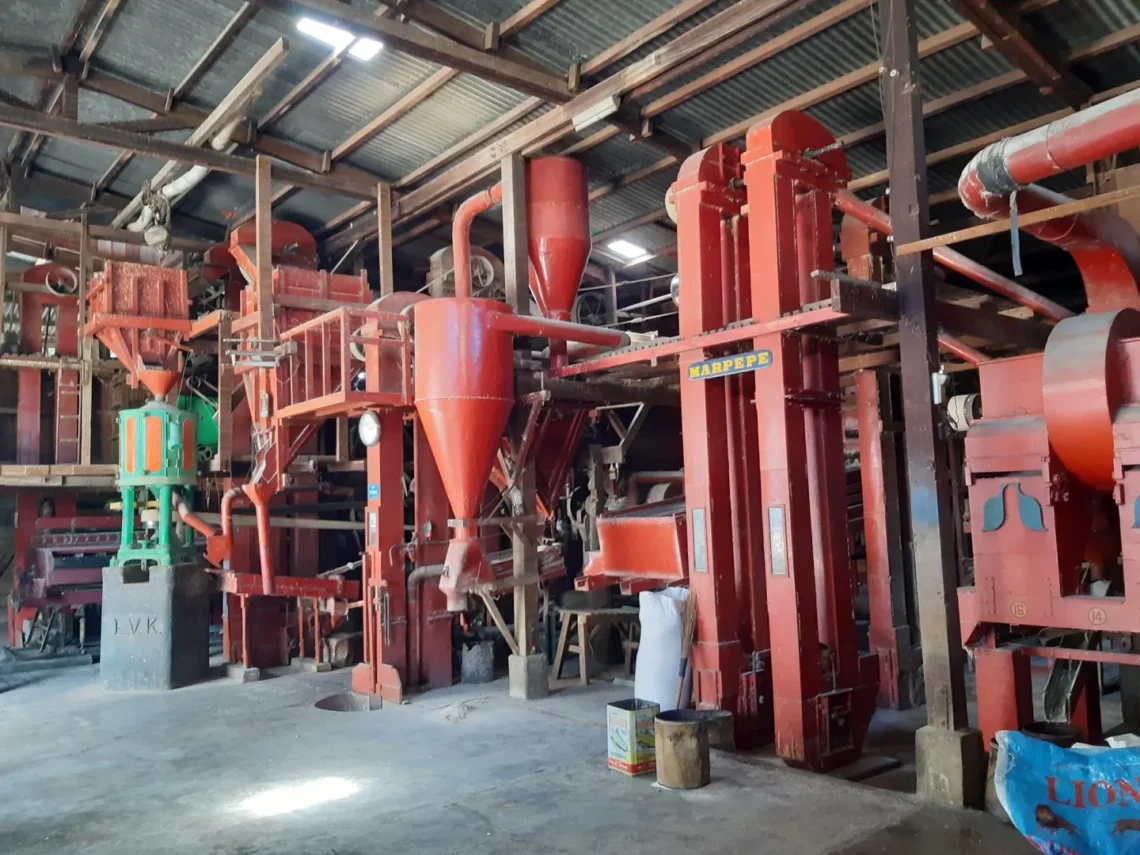
The Kong Family that owns the Marpepe cereal mill started in the 1890s when a Chinese man with the last name Kong, who was most likely a savvy business man from the Parian or a trader coming from Manila decided to marry someone with the last name of Belleza/Bellesa thus starting the family’s entrance into the Sugar history of Talisay, Cebu. The land where the present cereal mill is situated upon was part of the Talisay-Minglanillia estate owned by several powerful Spanish Friars who were the main land holders at the time. The sugar mill started in the late 19th century when the Sugar boom ramped up production thus necessitating the need for more sugar mills. The Marpepe mill would become one of 3 large Sugar mills of Talisay. The American period would see the construction of the train station that is right across the Mill, the ruins of which can still be seen today. One of the reasons the Kong-Belleza family was so prominent was also because of this train station, aside from carrying passengers it also carried cargo like Sugar and other agricultural products. The Marpepe mill would be one of the stops on the train route going to Argao. The Kong Family became very rich and prominent because of the Mill and were widely known not only in Talisay but the entire province. During 1952 the present Ancestral house of the Kong family would be built, made of a unknown wood that was resistant to termites. The most obvious feature of the ancestral house would be the geometric designs that can be seen as window grills. In the 1950s until the 1970s the cereal mill was almost unchallenged in San Isidro, the mill continued to grow with the massive mill equipment that we see today being installed around 1954. The Mill was influential in developing the surrounding neighborhood in San Isidro. The products of the Mill ranged from Sugar to Molasses and by the 1960s they started a trucking business. Eleno Belleza Kong or Ily Kong inherited the business from his mother Valeriana Kong after her death, today the Marpepe Cereal mill is still a powerhouse in producing Cereal for Talisay and exports Cereal across the country.

The Kong Ancestral House he house itself was built around 1952 according to Ily Kong who saw the house being built by order of his father. The house is in a rectangular shape, though the back of the house is more messy and undefined, it is facing away from the road going into the property. The main detail that people notice is the unique parallel design wood covering of the capiz windows. The house has 2 floors the first can be accessed through the door at the front of the house. and the second can be accessed through a grand staircase. The inside of the house is clean and simple, i could not see many wood designs but many of the fixtures like tables chairs and light bulbs look old and have sophisticated designs. Notably behind the house is the massive mill of the Marpepe Milling Corporation it has old Machinery used to process the products. The house is unpainted as per wishes of Ily Kong’s father. The house is on San Isidro Road.

