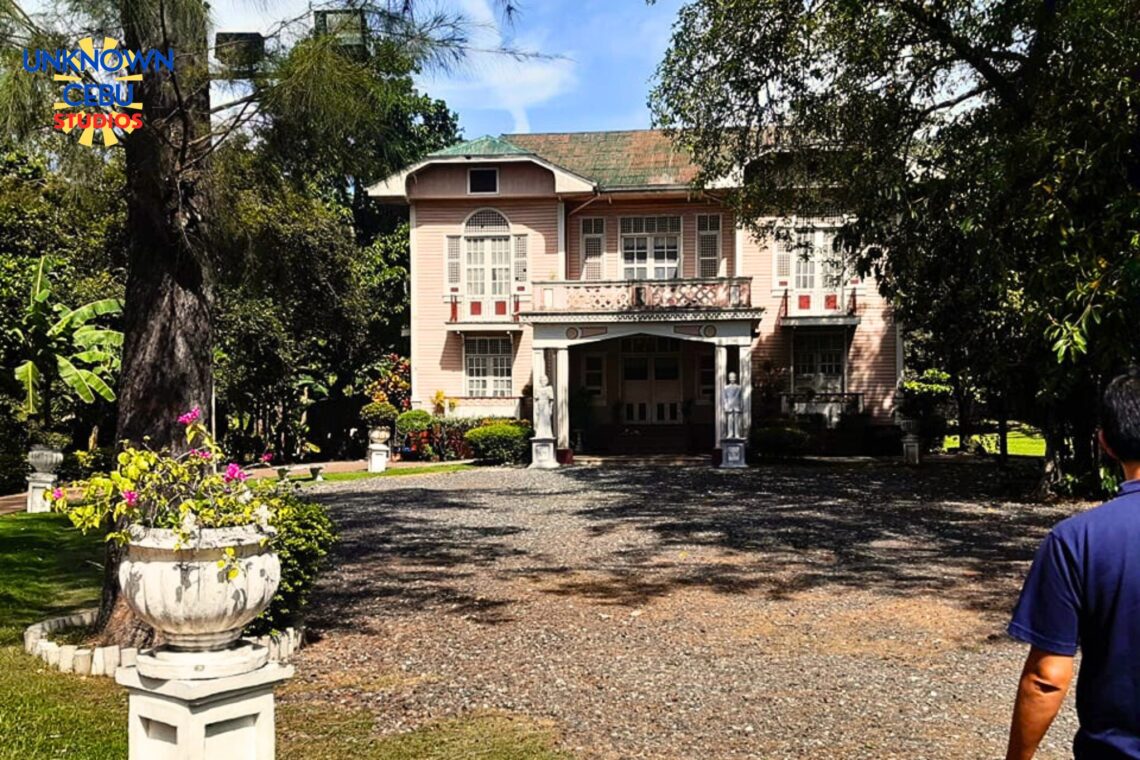
Carcar, Cebu is known as the Heritage city of the south and that is obvious when you arrive in the town proper. From the elegant St Catherine of Alexandria church to the many heritage houses in the Poblacion Carcar deserves its title as the heritage city of the south. Many come from all around Cebu to see the old houses and take pictures and today is no exception. The Spanish and American Period houses charm people to come to Carcar, even when other municipalities have their own ancestral houses they come to Carcar. They come because of the elegance of soo many in one place and today we will be covering one of them the Mancao Ancestral house. As you will see this is the Pink House of Carcar.

The Mancao Ancestral house is located beside Gaisano Carcar. The house was built by the Mancao Family starting in 1932 and ending in 1933. The house was built by spouses Pedro and Sofia Mancao who commissioned local artisans and builders. The house is a fine example of a 1930s house with a combination of Capiz and Glass windows, This time was when rich families started to use glass windows instead of pure capiz windows. The house is also influenced by Art-Deco architecture which can be seen in its streamline moderne facade. The house seems small from the outside but do not make that assumption because the house has a area of 500 Square meters before coming into the house you are greeted by a massive lawn and before reaching the steps you see two statues, these statues are made by the Abellana statue company and shows the couple who built this house Pedro and Sofia Mancao. The house is two stories tall and made of 80 percent Balayong,Narra and Lawaan hardwood, it has six bedrooms 1 veranda and 4 balconies.

The Dining of the room is full of the original furniture from 1933, The rattan and wood chairs are heavy and durable standing the test of time, The Dining room is small compared to the dining rooms of the other houses and that is because this was not the main consideration when making the house, the main consideration was the second floor with the large veranda. Before entering the dining room you are greeted by a large Bahillia or divider which separates the main guest room and the dining room. The patterns on the walls help ventilate the room. The bahillia is large and made of Narra wood with ornate carvings of flowers and columns.


Going up the second floor up the stairs you are greeted by he light coming from the veranda. The veranda itself is supported by two columns and has old furniture made of Marston matting. The veranda was where the family and visitors would meet and discuss business and also lounge in the sun and have fun when the family was not busy. In each of the bedrooms there is a bed, cabinet and bathroom. One of the bedrooms was repurposed into the office of the current owner of the house Dr.Miguel Pa.Mancao. Right accross the veranda on the other side of the house is the small family chapel with a large Retablo. The retablo is ornately carved. Two images of the Santo Nino and the Virgin Mary are beside the retablo.

This was the Mancao Ancestral house of Carcar or the Pink House, The house is beautiful and simple in its own way, The house is now a museum but you need make an appointment before entering. The access to the house is a little limited but it should not be a reason to miss out on an opportunity to see the past today.

